
Did you know that according to the American Association of Poison Control Centers, more than 2 million poisoning cases are reported each year in the U.S., with children under six accounting for nearly half? A surprising number of those incidents involve items stored in the garage (affiliate) - antifreeze, pesticides, pool chemicals, and cleaning supplies that often sit within easy reach.
As a professional organizer with 25+ years helping families in the Collegeville, PA area and virtually nationwide, I've walked into countless garages where hazardous materials sit in plain sight. The garage (affiliate) is a tricky place to organize - it holds tools (affiliate), chemicals, sports gear, seasonal items, and yes, the car. But when young children or curious pets share that space, garage (affiliate) organization becomes a safety issue, not just a tidiness one.
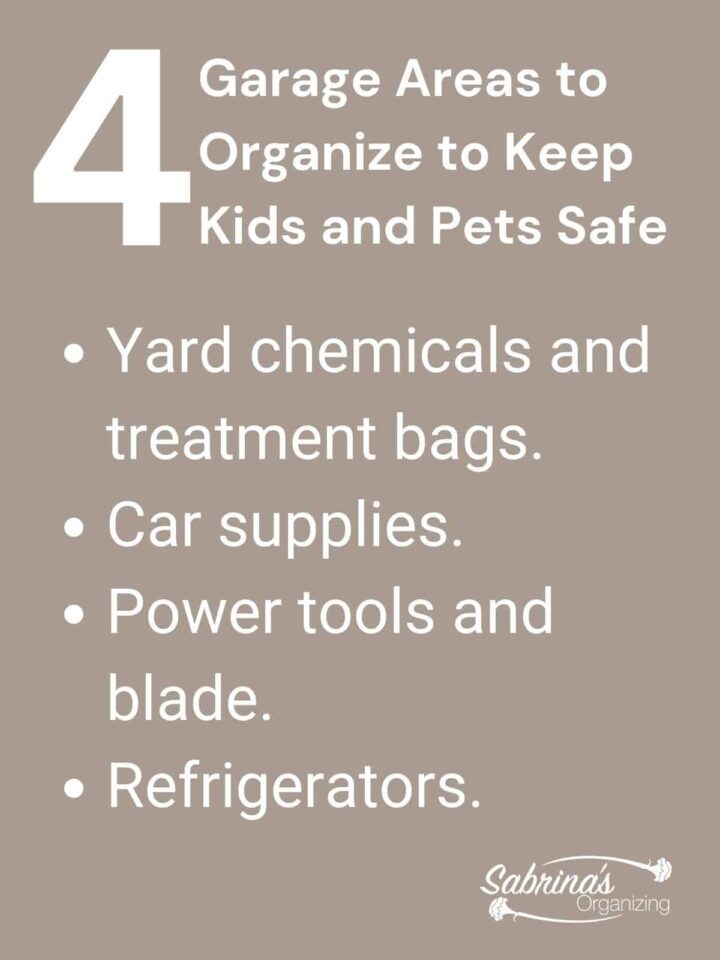
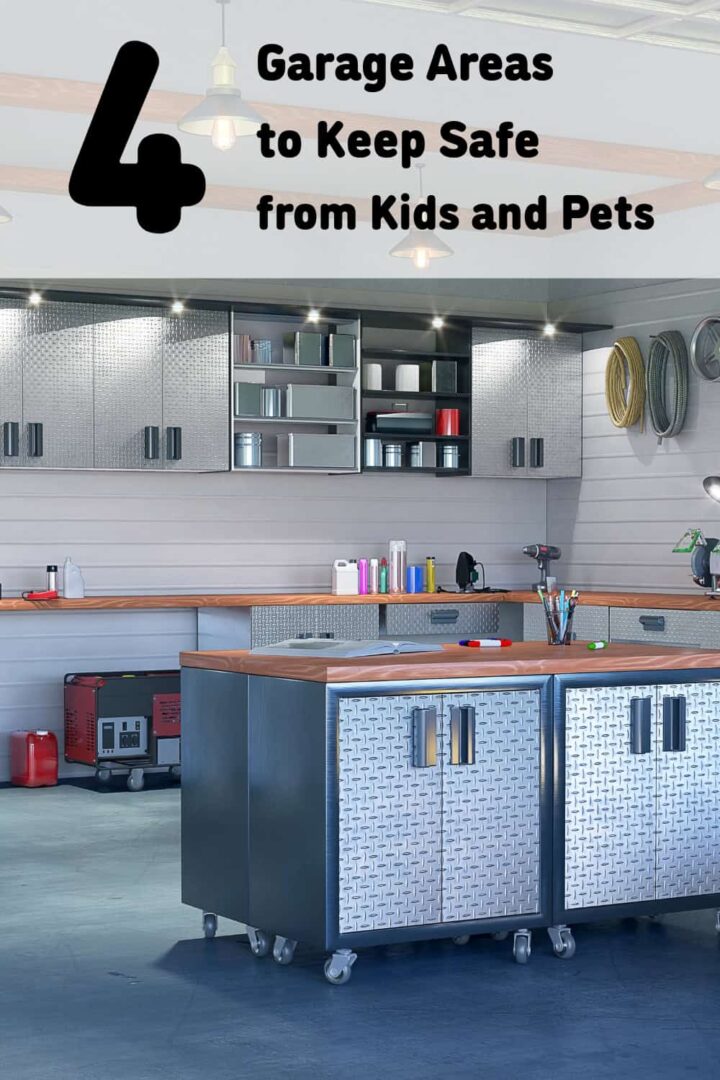
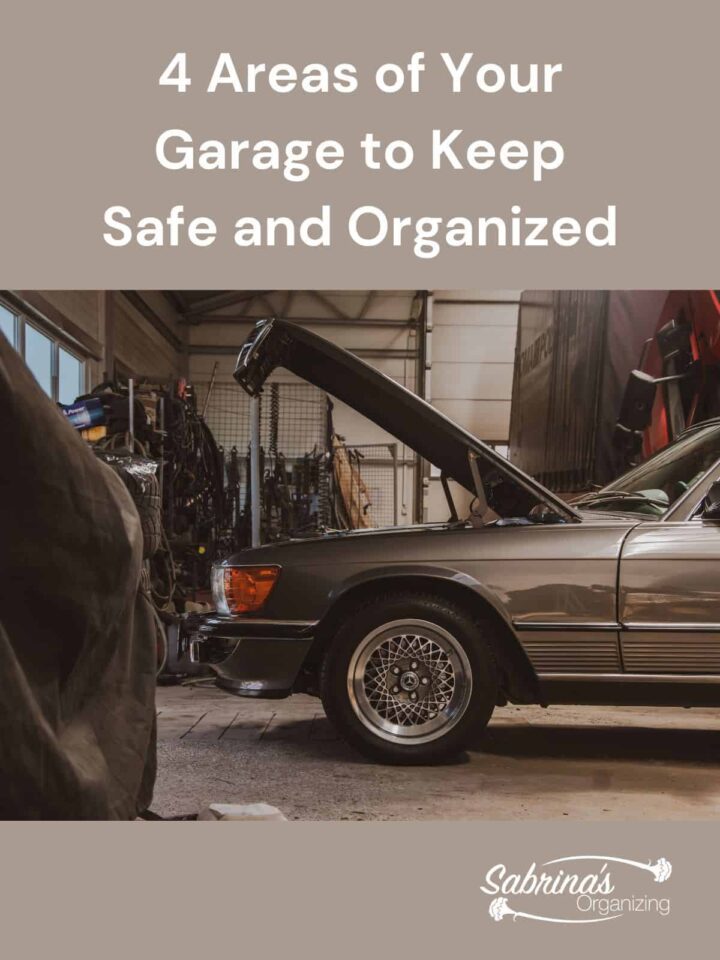
This week's challenge focuses on the garage (affiliate). If you want to clear it out and protect your family at the same time, these four areas are where to start.
Jump to:
- Key Takeaways
- What Makes a Garage Dangerous for Kids and Pets?
- Garage Hazard Comparison Table
- 1. Yard chemicals and treatment bags.
- 2. Car supplies.
- 7 Essential Products for Organizing Tools
- Creative Ways to Organize Tools in a Closet
- 4. Garage Refrigerators.
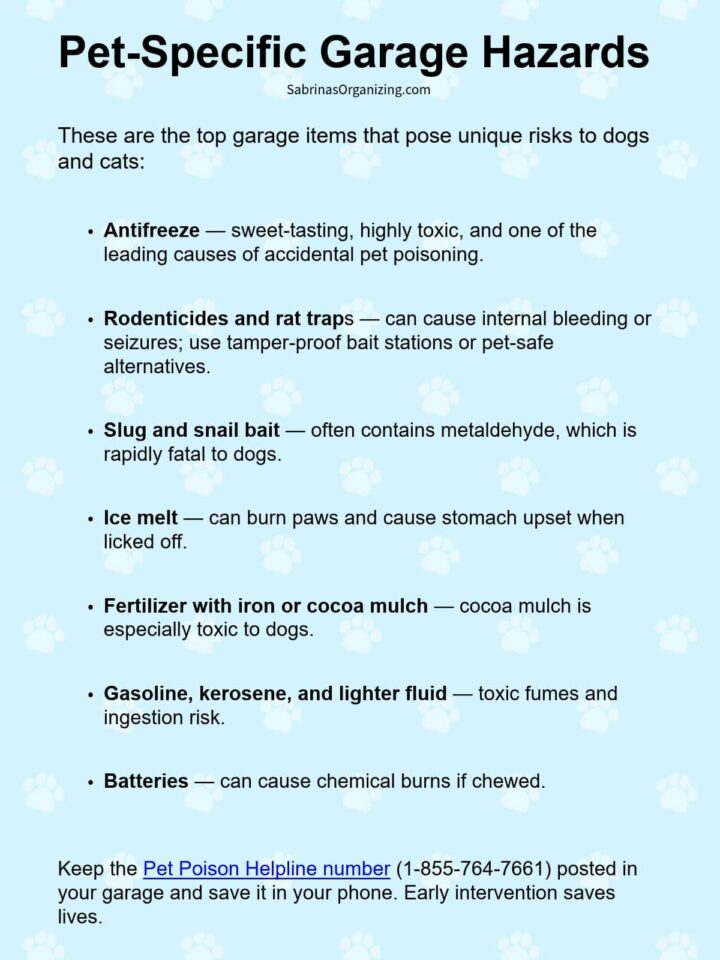
- Pet-Specific Garage Hazards
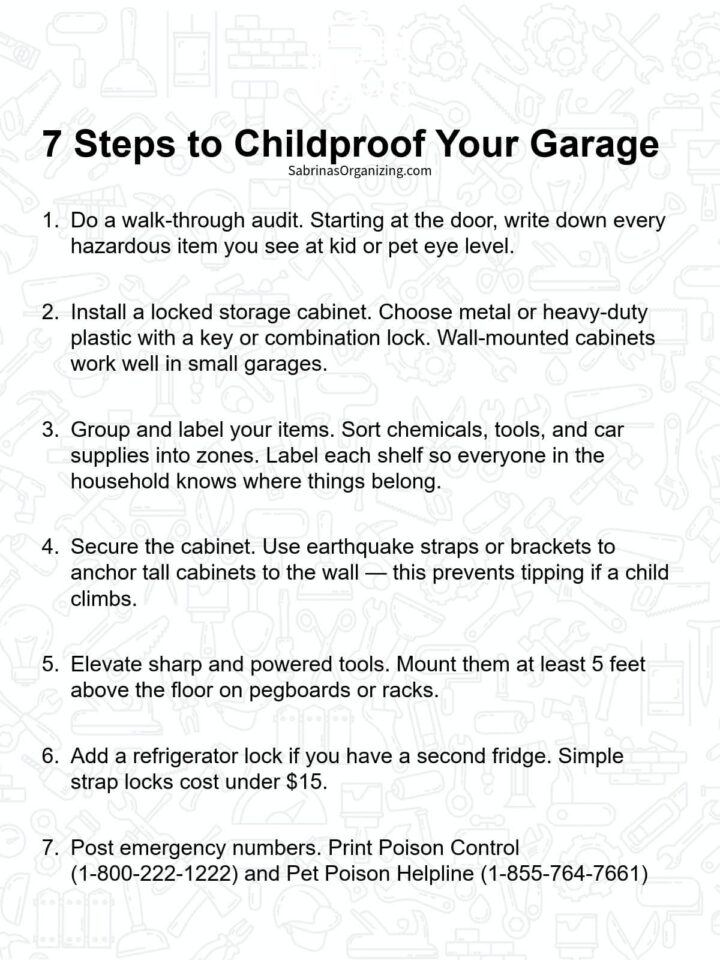
- How to Childproof Your Garage in 7 Steps
- Recommended Safety Products
- Locked Garage Cabinets
- Quick Action Steps
- Frequently Asked Questions
- Keeping Your Garage Safe Is an Ongoing Project
Key Takeaways
- Organizing the garage (affiliate) is essential to keep kids and pets safe from hazardous items like chemicals, tools (affiliate), and car supplies.
- Focus on four high-risk areas: yard chemicals, car supplies, power tools (affiliate), and refrigerators.
- Store dangerous items in locked cabinets, ideally at least 5 feet high or behind secured doors.
- Label (affiliate) shelves (affiliate), group similar items, and use earthquake straps (affiliate) to prevent cabinets from tipping.
- Many common garage (affiliate) items - including antifreeze, rodenticides, and fertilizer - are especially toxic to pets.
- Keep the Poison Control number (1-800-222-1222) and Pet Poison Helpline (1-855-764-7661) posted in your garage (affiliate).
What Makes a Garage Dangerous for Kids and Pets?
A garage is dangerous for children and pets because it commonly stores automotive fluids (antifreeze, motor oil, brake fluid), lawn and garden chemicals (fertilizer, pesticides, weed killer), power tools (affiliate) with sharp blades, sports equipment, and beverages in a second refrigerator. These items are often left on open shelves (affiliate), on the floor, or within reach of toddlers and pets. Without locked storage, clear labeling, and elevated shelving (affiliate), even a routine (affiliate) trip to grab a bike or a cold drink can expose children and animals to serious harm.
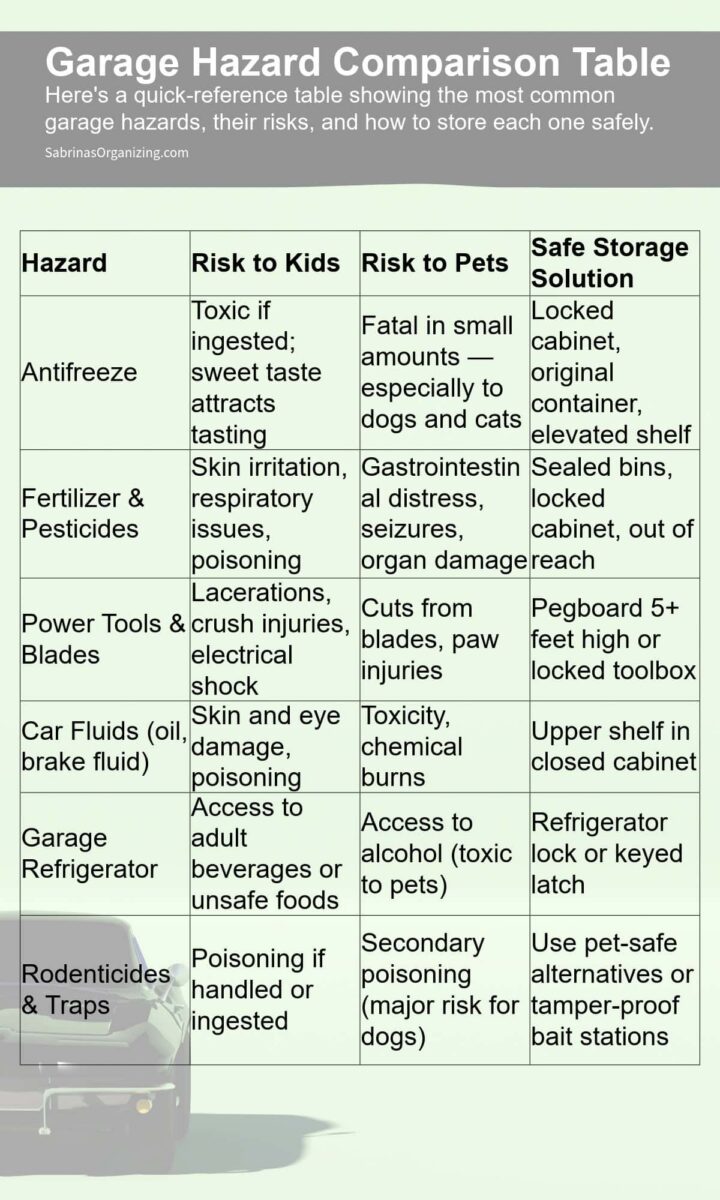
Garage Hazard Comparison Table
Here's a quick-reference table showing the most common garage (affiliate) hazards, their risks, and how to store each one safely.
| Hazard | Risk to Kids | Risk to Pets | Safe (affiliate) Storage Solution |
| Antifreeze | Toxic if ingested; sweet taste attracts tasting | Fatal in small amounts — especially to dogs and cats | Locked cabinet, original container, elevated shelf |
| Fertilizer & Pesticides | Skin irritation, respiratory issues, poisoning | Gastrointestinal distress, seizures, organ damage | Sealed bins, locked cabinet, out of reach |
| Power Tools (affiliate) & Blades | Lacerations, crush injuries, electrical shock | Cuts from blades, paw injuries | Pegboard 5+ feet high or locked toolbox (affiliate) |
| Car Fluids (oil, brake fluid) | Skin and eye damage, poisoning | Toxicity, chemical burns | Upper shelf in closed cabinet |
| Garage (affiliate) Refrigerator | Access to adult beverages or unsafe foods | Access to alcohol (toxic to pets) | Refrigerator lock or keyed latch |
| Rodenticides & Traps | Poisoning if handled or ingested | Secondary poisoning (major risk for dogs) | Use pet-safe (affiliate) alternatives or tamper-proof bait stations |
1. Yard chemicals and treatment bags.
Fertilizer, weed killer, pesticides, grass seed, ice melt, and even mulch bags are among the most common - and most dangerous - items sitting open in garages. When I worked with clients, I almost always found these items on low shelves (affiliate) or directly on the floor, right where toddlers and pets could reach them.
Many fertilizers contain ammonium nitrate or urea, which can cause severe GI irritation in pets. Weed killers with glyphosate or 2,4-D can irritate skin and eyes. Slug bait containing metaldehyde is potentially fatal to dogs within hours of ingestion.
Safe Storage Tips for Yard Chemicals
If exposure happens, call Poison Control at 1-800-222-1222 or Pet Poison Helpline at 1-855-764-7661 immediately.
- Store all lawn and garden chemicals in a locked cabinet at least 5 feet off the ground.
- Keep products in their original containers so labels (affiliate) and warnings stay visible.
- Never transfer chemicals into food containers (affiliate), bottles, or unmarked jars.
- Separate fertilizers from pesticides - some combinations can react.
2. Car supplies.
Soaps, motor oil, antifreeze, brake fluid, windshield washer fluid, and gasoline are all standard garage (affiliate) items - and all of them pose serious risks. Antifreeze is the most well-known offender because ethylene glycol has a sweet taste that attracts children and pets. As little as a teaspoon can be fatal to a cat, and a few tablespoons can kill a medium-sized dog.
You may think your kids know better than to touch these items, but curiosity is unpredictable. Many car fluids also cause skin irritation or chemical burns on contact, not just ingestion.
Safe Storage Tips for Car Supplies
- Store all automotive fluids on an upper shelf inside a closed, locked cabinet.
- Place absorbent mats under storage areas to catch leaks immediately.
- Choose pet-safer propylene glycol antifreeze when possible (though it is still not 100% safe (affiliate)).
- Dispose of used oil and fluids at your local hazardous waste facility - never leave open containers.
- Wipe down spills right away; dogs and cats will lick up the residue on the floor.
3. Power tools and blades.
Any sharp, pointy, or powered tool should be placed high, behind locked doors, or both. Drills, saws, box cutters, pruning shears, hedge trimmers, and even gardening tools (affiliate) like spades and rakes (affiliate) can cause serious injury if grabbed by a curious child or knocked over by a wagging tail.
I like placing these items on a back wall above a workbench so little ones can't reach them. A pegboard mounted 5 or more feet up is one of the simplest, most visual ways to keep tools (affiliate) organized and out of reach.
Safe Storage Tips for Tools
- Mount pegboards, magnetic strips, or tool racks at least 5 feet above the floor.
- Unplug power tools when not in use and remove batteries from cordless drills.
- Store sharp blades, box cutters, and utility knives inside a locked toolbox (affiliate).
- Keep extension cords coiled and off the floor to prevent tripping and chewing.
- Label (affiliate) tool storage zones so tools get returned to the right place after use.
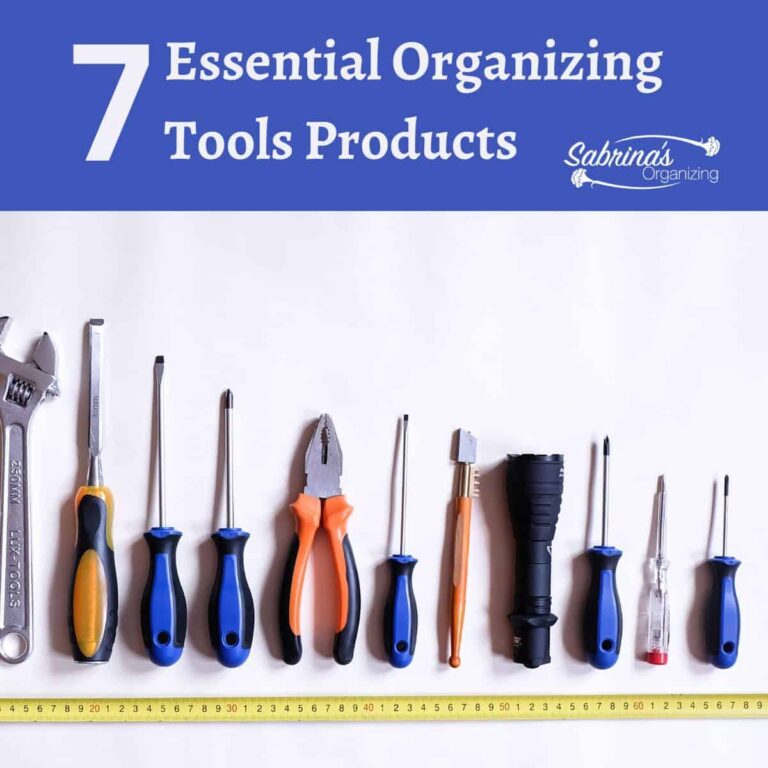
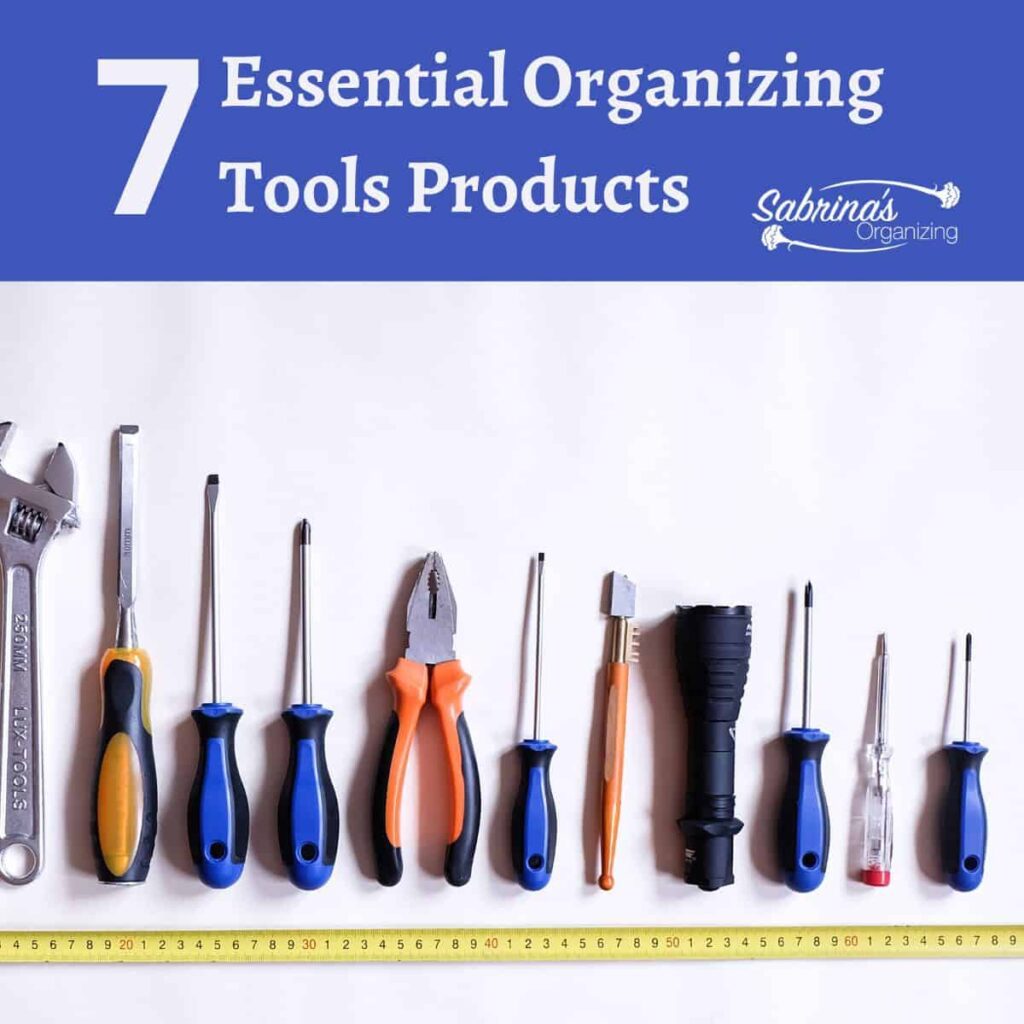
7 Essential Products for Organizing Tools
How do your tools look right now? Are they organized in a way that makes the best use of your time when you need them?
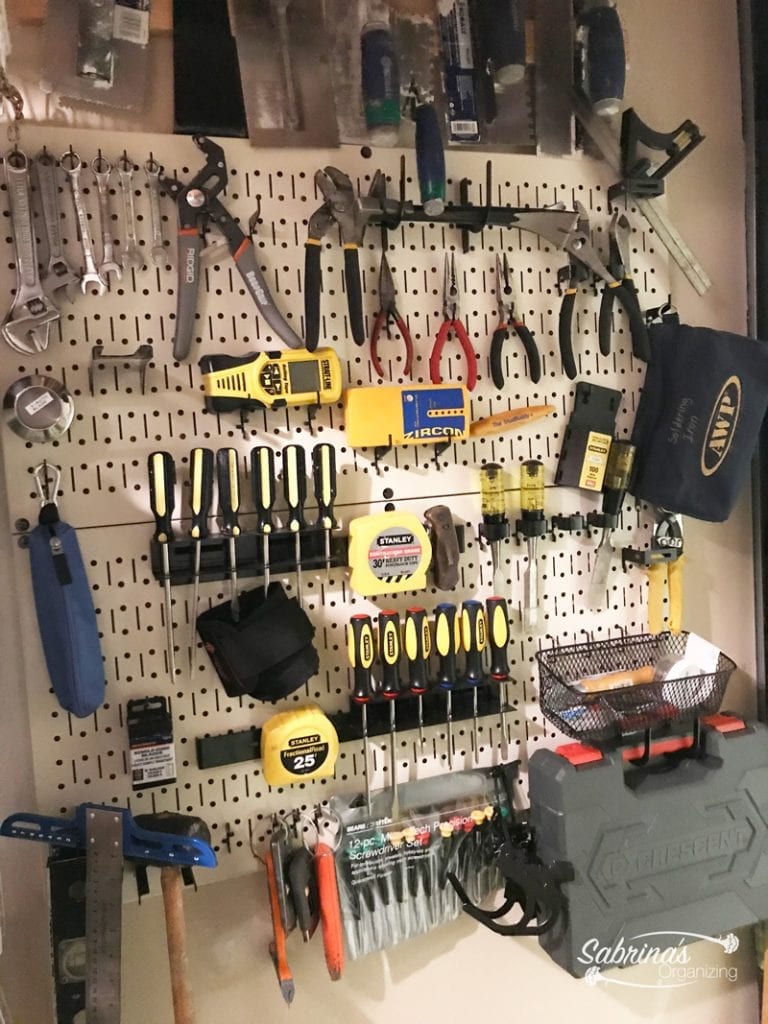
Creative Ways to Organize Tools in a Closet
Update: It has been five years since we organized this closet and there were some updates in the last year that I wanted to share with you.
4. Garage Refrigerators.
If you use a secondary refrigerator in your garage (affiliate) for extra groceries, adult beverages, or overflow storage, it's best to install a fridge lock. Garage (affiliate) fridges often get less daily traffic from parents, which means kids and teens may explore them without supervision.
Alcohol is especially dangerous - even small amounts can cause alcohol poisoning in young children and pets. Dogs can suffer significant toxicity from just a few sips of beer, wine, or spirits because their bodies can't process ethanol the way humans do.
Safe Storage Tips for Garage Refrigerators
- Install a refrigerator lock (magnetic or strap-style) designed for appliance doors.
- Keep alcohol on the top shelf and behind other items.
- Remove glass bottles that could break if knocked over.
- Check expiration dates monthly - forgotten food in a secondary fridge is a common issue.
- Unplug the unit if it won't be used for an extended period to save energy and reduce risk.
Pet-Specific Garage Hazards
The title of this post mentions pets, and they deserve their own section. Pets explore the garage differently than children - they sniff, lick, and chew things that a child would ignore. These are the top garage items that pose unique risks to dogs and cats:
- Antifreeze - sweet-tasting, highly toxic, and one of the leading causes of accidental pet poisoning.
- Rodenticides and rat traps - can cause internal bleeding or seizures; use tamper-proof bait stations or pet-safe (affiliate) alternatives.
- Slug and snail bait - often contains metaldehyde, which is rapidly fatal to dogs.
- Ice melt - can burn paws and cause stomach upset when licked off. We had this happen to our dog this year when we walked around the neighborhood and the neighbors didn't use the pet-friendly salt (affiliate).
- Fertilizer with iron or cocoa mulch - cocoa mulch is especially toxic to dogs.
- Gasoline, kerosene, and lighter fluid - toxic fumes and ingestion risk.
- Batteries - can cause chemical burns if chewed.
Keep the Pet Poison Helpline number (1-855-764-7661) posted in your garage and save it in your phone. Early intervention saves lives.
How to Childproof Your Garage in 7 Steps
Follow these steps in order for the most effective garage safety plan:
- Do a walk-through audit. Starting at the door, write down every hazardous item you see at kid or pet eye level.
- Install a locked storage cabinet. Choose metal or heavy-duty plastic with a key (affiliate) or combination lock. Wall-mounted cabinets work well in small garages.
- Group and label (affiliate) your items. Sort chemicals, tools, and car supplies into zones. Label (affiliate) each shelf so everyone in the household knows where things belong.
- Secure the cabinet. Use earthquake straps (affiliate) or brackets to anchor tall cabinets to the wall - this prevents tipping if a child climbs.
- Elevate sharp and powered tools. Mount them at least 5 feet above the floor on pegboards or racks.
- Add a refrigerator lock if you have a second fridge. Simple strap locks cost under $15.
- Post emergency numbers. Print Poison Control (1-800-222-1222) and Pet Poison Helpline (1-855-764-7661) and tape them near the garage entry.
I bet you didn't think there were that many dangerous items in your garage, did you? There are probably more, but I just wanted to share the most common things. Now that you know what to look for? Below are examples of products you can use to hide these items.
Recommended Safety Products
First, find a cabinet or two with a lock. They can hang it on the wall or place it on the floor. It can even have wheels to help you move it around quickly. Here are some I found on Amazon (affiliate).
A cabinet that mounts on the wall (affiliate) works great if you have a smaller garage. It provides additional storage space underneath for parking the car.
Visit our recent post and see how we organized our garage: DIY Small Garage Organization Project
Tall cabinets with casters (affiliate) will help you move items around easily, especially when you need to clean.
Refrigerator lock strap (affiliate) - inexpensive and universal-fit.
Earthquake/anti-tip cabinet straps (affiliate) - prevent climbing-related tipping
Tamper-proof rodent bait stations (affiliate) - pet-safer alternative to loose rodenticide.
Pegboard organizer with hooks (affiliate) - elevates tools and keeps them visible.
Spill containment mats (affiliate) - catch chemical drips before they reach the floor.
Various locks can be added to cabinets. Here are some I found on Amazon (affiliate) that will lock up your refrigerator and your dangerous tools and supplies.
Locked Garage Cabinets

Garage Storage Cabinet with 2 Doors
Buy Now →
Cabinet, Metal with Lock - 72" Garage Storage Cabinet
Buy Now →(affiliate)
Secondly, group the items, place them inside the cabinet, and label (affiliate) each shelf. Marking the outside of the cabinet, if you need a reminder, is also effective.
Reminder: Using earthquake straps also helps keep the cabinet in place, just in case anyone wants to climb the cabinets.
Quick Action Steps
Today (15 minutes)
- Walk through your garage and identify every hazardous item at or below waist height.
- Post Poison Control and Pet Poison Helpline numbers near the garage door.
This Weekend (1-2 hours)
- Move all chemicals, car fluids, and sharp tools to upper shelves (affiliate) or a locked cabinet.
- Install a refrigerator lock if you have a garage fridge.
This Month
Label (affiliate) shelves (affiliate), group items, and create a permanent storage plan the whole family understands.
Feel free to visit our garage, attic, and basement posts for more ideas.
Purchase and install a locked storage cabinet and earthquake straps (affiliate).


Frequently Asked Questions
The most dangerous items in a garage for children are yard chemicals (fertilizer, pesticides, weed killer), automotive fluids (antifreeze, motor oil, brake fluid), power tools with sharp or spinning blades, and adult beverages stored in a secondary refrigerator. Each of these should be stored in a locked cabinet or at least 5 feet off the ground to prevent access.
To childproof your garage:
(1) audit every hazard at kid eye level,
(2) install a locked storage cabinet for chemicals and sharp tools,
(3) secure the cabinet to the wall with earthquake straps,
(4) mount tools on pegboards at least 5 feet high,
(5) add a lock to any secondary refrigerator,
(6) label all storage zones, and
(7) post Poison Control numbers near the entry.
Antifreeze (ethylene glycol) is the most dangerous - as little as a teaspoon can kill a cat. Other toxic garage items include rodenticides, slug and snail bait (metaldehyde), fertilizers containing iron, cocoa mulch, ice melt, gasoline, and motor oil. Always store these in locked cabinets and clean spills immediately since pets will lick residue off the floor.
Store all chemicals, pesticides, and automotive fluids at least 5 feet above the floor, ideally inside a locked cabinet. This height is above most toddlers' reach and prevents pets from knocking over containers. For extra safety, anchor tall cabinets to the wall so a climbing child cannot tip them.
If your child is exposed to garage chemicals, call Poison Control at 1-800-222-1222 right away. For pets, call the Pet Poison Helpline at 1-855-764-7661 or ASPCA Animal Poison Control at 1-888-426-4435. Do not wait for symptoms - many toxins (especially antifreeze) work fast, and early treatment dramatically improves outcomes. If possible, bring the container or a photo of the label with you.
The safest garage cabinets are metal or heavy-duty plastic with keyed or combination locks, anchored to the wall or floor. Wall-mounted cabinets work well in smaller garages since they free up floor space. Tall cabinets with casters are useful if you need to move them for cleaning, but they must still be locked when not in use.
Keeping Your Garage Safe Is an Ongoing Project
Keeping this room organized and secure is crucial to protecting your family. Peace of mind is one of the most important feelings you can have in your home - why not take the time to prevent an unfortunate event before it happens? A garage safety audit takes less than an afternoon but can protect your kids and pets for years to come.
Do you have any tips for protecting your loved ones in your garage? Please leave a comment below - I would love to hear what's worked for your family.
Please note that these are affiliate links on Amazon (affiliate), and at no additional cost to you, I will earn an affiliate fee if you decide to make a purchase.



Linda Samuels says
What a comprehensive list of lurking garage dangers! You've given great food for thought along with excellent suggestions for ways to make this space safer. Another common item found in garages that can be dangerous is paint solvent. Keeping it on an out of reach shelf or locked away would be a smart thing to consider.
Seana Turner says
A post like this reminds me of how much parents need to think about in keeping kids safe. Even the garage needs some focused attention! I know antifreeze can be fatal for pets, so that is another thing to consider. When we moved into our house we found many abandoned beer bottles in a "loft" above the garage. Clearly the teens who had lived there before had figured something out...