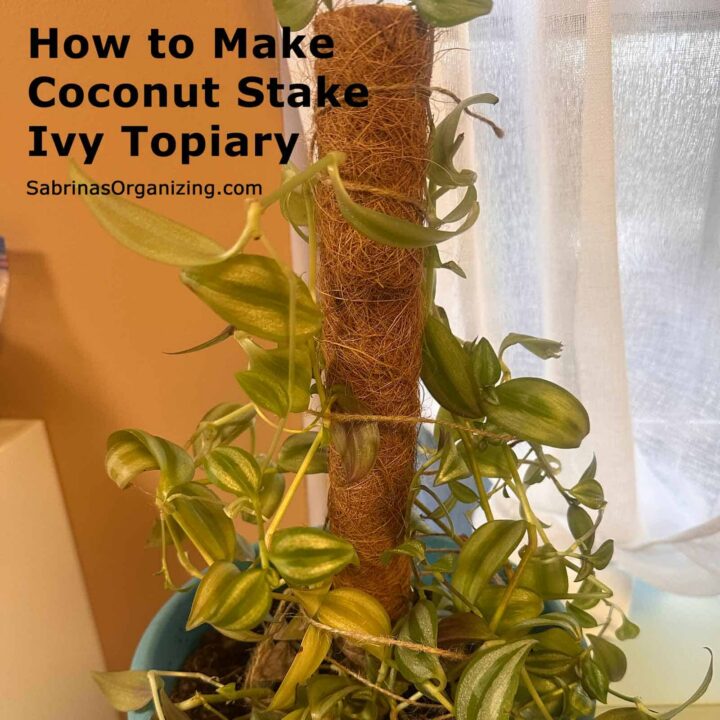
Whether you are dealing with a mess of ivy growth in indoor pots or just love the look of a well-architected design ivy topiary, this project is for you. It is a super-easy project and quick to set up. I recently made this coconut stake ivy topiary and wanted to share it with you.
Jump to:
Key Takeaways
- This Coconut Stake Ivy Topiary project is easy and quick to set up, taking about 30 minutes.
- Use supplies like an ivy plant, potting soil, and a coconut stake, which you can find on Amazon (affiliate) through affiliate links.
- Carefully stake the coconut, remove the twine, and guide the ivy branches up the stake with assistance for better results.
- Tips include using flexible ivies like English Ivy and being gentle with delicate leaves during wrapping.
- The project aims to elevate your indoor ivy for a beautiful presentation while enjoying the process.
Information You Need to Know about this Coconut Stake Ivy Topiary DIY Project
I have been seeing these coconut stake topiaries around at garden centers recently and figured I would try them out. It looks so pretty, I wanted to try them with one of my ivies.
Supplies Needed:
Ivy plant in a pot 8 inches wide (affiliate) - I used Tradescantia Zebrina, Purple Wandering Jew Live Plant (it is a succulent).
Potting soil (affiliate)
Coconut Stake: I couldn't find the exact one, so here are several Coconut Stake options at different lengths and designs on Amazon (affiliate).
Please note these are affiliate links through Amazon (affiliate), and at no additional cost to you, I will earn an affiliate commission if you decide to make a purchase.
It is pretty affordable. The one I bought was about 11 inches of coconut stake with an additional 6 inches of wood stake, and they were stackable. It was in a two-pack for $16.00. I only used one for this project, so it was $8.00.
It took me about 30 minutes to set up.
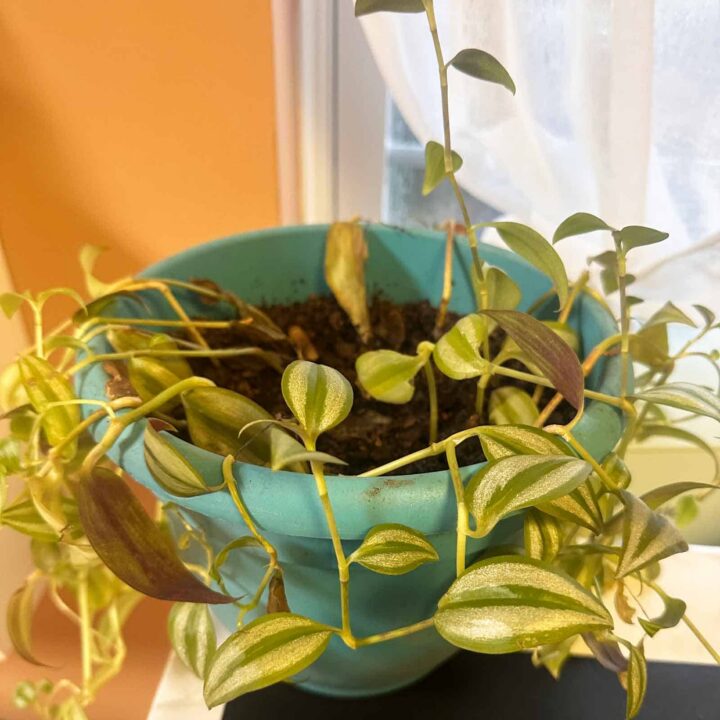
Before transformation
Below is the image of the plant before I added the coconut stake ivy.
How did I make this Coconut Stake Ivy Topiary?
Time needed: 30 minutes
These steps for adding a coconut stake to make your ivy topiary are pretty easy. However, you should be very careful during this process because you can easily break the leaves and the vine.
- Find a healthy ivy plant
First, make sure the plant is watered, and the leaves are flexible.
- Stake the coconut stake
Next, make room for the stake in the center of the pot. Be sure not to crush any roots, leaves, or branches.

- Remove twine
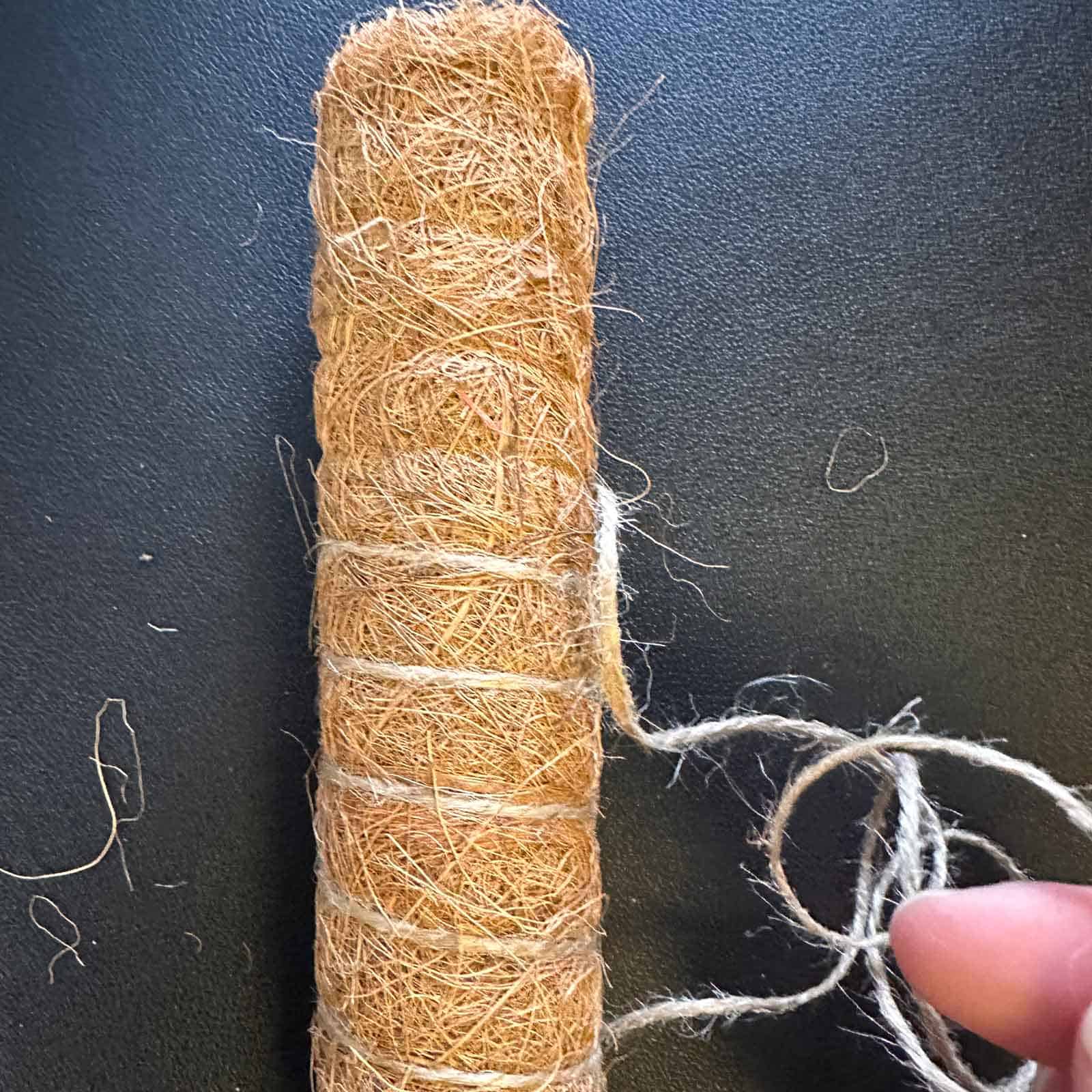
Now, it is time to remove the twine by detaching it from the top of the coconut stake and unraveling it toward the plant soil.

- Remove enough of the twine until you get to the soil
Firstly, you need to make sure the twine (which should be attached to the stake) is under all the ivy branches. This will make it easier to start guiding the branches up the stake.
- Add the ivy to the coconut stake.
Ok, here is the tricky part.
Next, get another set of hands to help you with this part. Have the person hold the plants up while you guide the twine in a spiral, and loosely add the ivy leaves and branches up the stake.
If the leaves are not flexible, you may need to leave the twine loose. It will hold the ivy even if it is loose.
Then, tie the twine to the other part of the rope around the top of the stake to hold it in place.


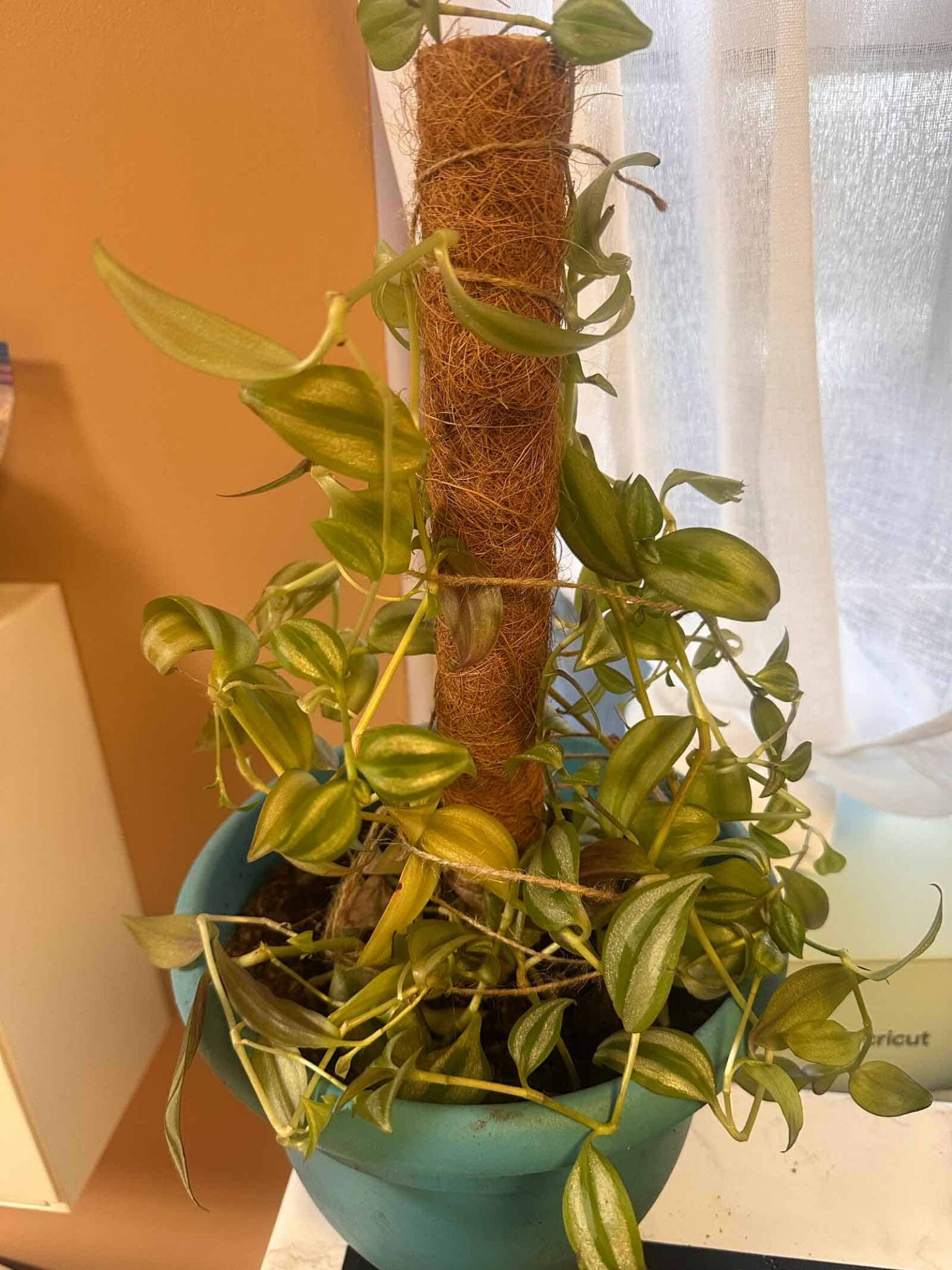
The Big Reveal
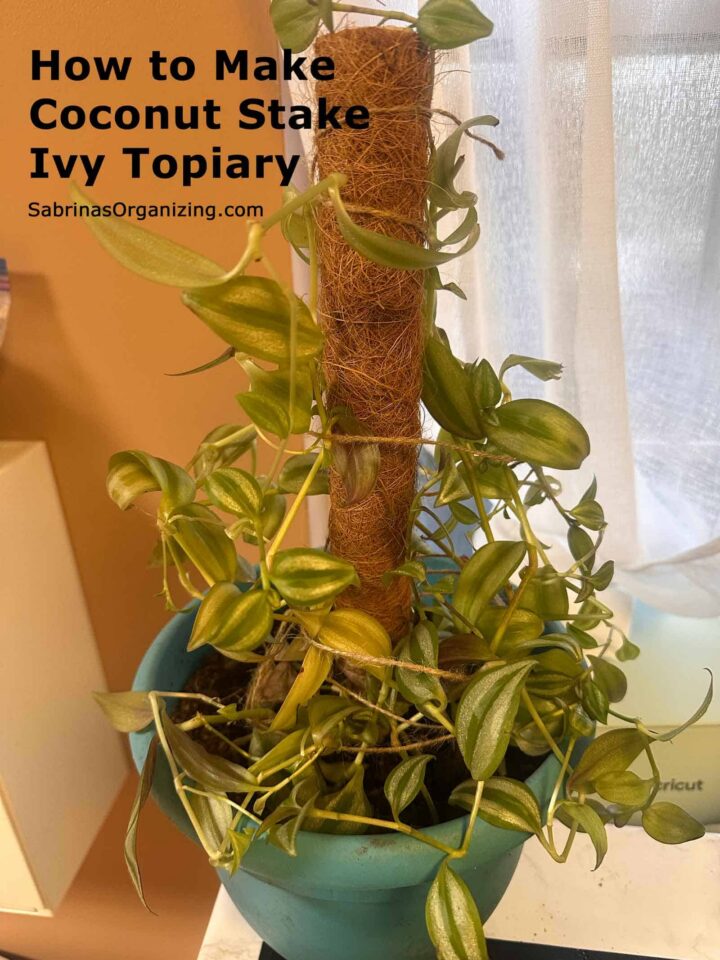
This Coconut Stake Ivy Topiary looks lovely. And, I am glad I tried it. I have another one I will try with another ivy I have in the future.
Check out my other Round Ivy Topiary I made recently.

Tips when making this Coconut Stake Ivy Topiary
Below are some tips when doing this coconut stake ivy topiary.
- This coconut stake is not a moss pole. You do not need to dampen it before using it for your ivy.
- The rope is already included and can be easily untwisted, so you can wrap it around your ivy and gently lift the branches and leaves.
- If you need more rope, you can wrap it around the stake and tie it loosely to the ivy.
- My ivy was very delicate. So, to wrap it up, be sure to hold the branches up and gently wrap the rope around them, a little at a time, until you reach the top. Get an extra set of hands if you need help.
FAQs
Below are some additional frequently asked questions about this coconut stake ivy topiary project.
Stick with more flexible, less rigid branch types like English Ivy.
That depends on the size of your plant and pot. For an 8-inch pot, a stake around 11 to 16 inches works well.
You want the stake tall enough to show off your ivy's length, but not so tall that the top half is bare. If your ivy is still growing, you can always start with a shorter stake and upgrade later.
Yes! If your ivy outgrows the stake, you can carefully unwrap the twine, remove the stake, and replace it with a taller one.
Since the stakes you used are stackable, you could also try stacking a second one on top for extra height.
No. Unlike a moss pole, a coconut stake doesn't need to be dampened.
It's simply a structural support to guide your ivy upward, so just focus on watering the soil as you normally would.
It happens, especially with more delicate plants. If a branch snaps, you can trim it cleanly and propagate the cutting in water or moist soil.
To prevent breakage, make sure your plant is well-watered before you start so the vines are as flexible as possible.
You can, though results will vary depending on how stiff or heavy the vines are.
Pothos tends to work reasonably well since the stems are semi-flexible. Just keep the twine a little looser to avoid snapping thicker stems.
They serve slightly different purposes. A moss pole is ideal for plants that produce aerial roots and can actually climb, like monstera.
A coconut stake works great for ivy and other trailing plants where you just want to guide the vines upward for a prettier presentation without needing the moisture a moss pole provides.
I hope this Coconut Stake Ivy Topiary DIY inspires you to leave your dangling ivy so it can be presented like the truly gorgeous plant it is. Enjoy potting your indoor ivy.
Check out our other indoor plant posts.