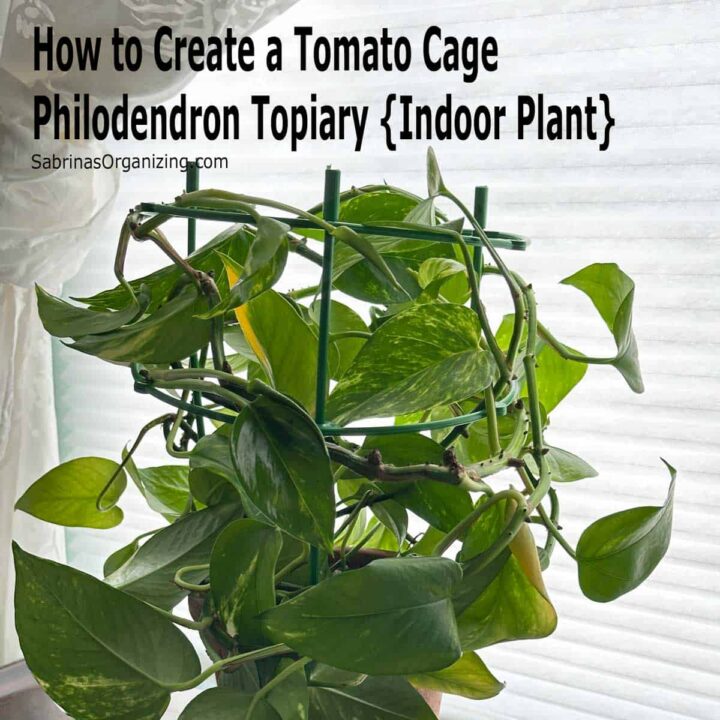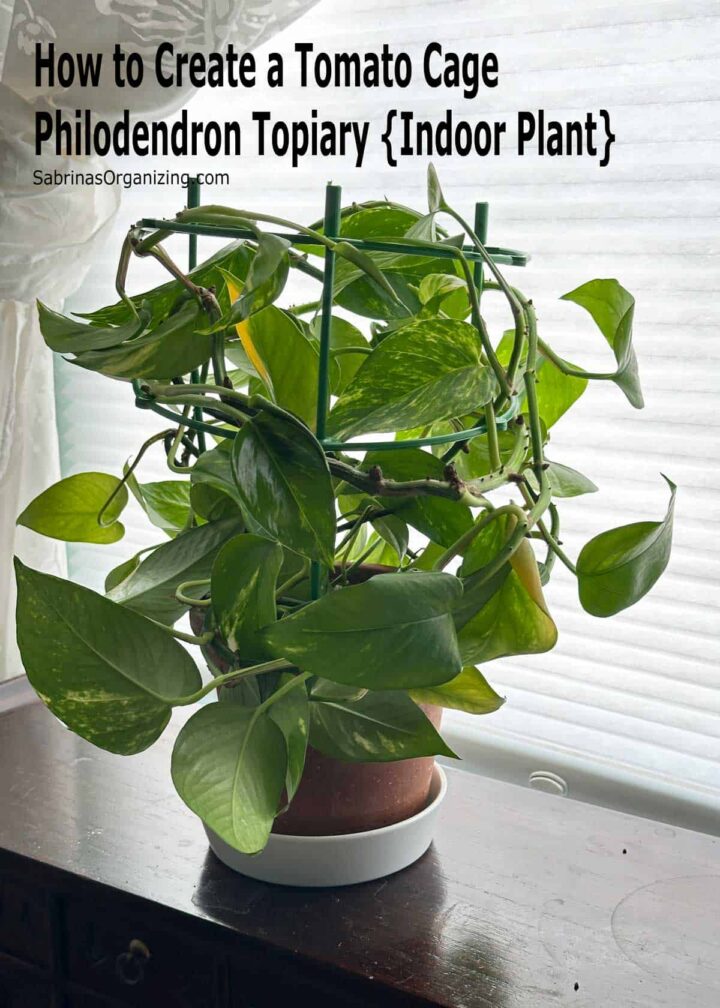
If you love ivy and philodendron plants, as I do, or want to create something unique with them, consider this tomato cage philodendron topiary DIY project to make your plant the star of your home. I love any project that has a dual purpose, and this DIY project is no different. It looks pretty and is functional. Stick around and check out this tomato cage philodendron topiary you can set up today. Please note: this is a philodendron, not an ivy, but I wanted to show you how versatile this tomato cage can be for even the thickest vines.
Jump to:
Key Takeaways
- Philodendron topiary is a fun and functional gardening project that enhances your home decor (affiliate).
- Creating a Tomato Cage Philodendron Topiary is easy and requires only a pot, potting soil, and a tomato cage.
- Use healthy Philodendron plants and ensure to adjust leaves to achieve a neat look.
- Regular maintenance, such as rotating the plant and providing adequate humidity, keeps your topiary thriving.
- Repurposing items like tomato cages promotes sustainability while adding beauty to your indoor plants.
Information You Need to Know about this Tomato Cage Philodendron Topiary DIY Project
As from Wikipedia, Topiary is a horticultural practice of training perennial plants by clipping the foliage and twigs of trees, shrubs, and subshrubs to develop and maintain clearly defined shapes.
Creating this with ivies is so easy, and I am going to show you one way to make them below.
I made ivy topiaries in the 90s and loved them. So, to revisit this fun project, the Philodendron can grow longer and create cool patterns with the Philodendron. This one is super easy to do by using a predesigned plastic frame.
I decided to use leftover pieces of my tomato plant cage.
I bought a large (affiliate) pack of them for my garden last year and had some leftover. Repurposing is my jam.
Supplies used:
Philodendron plant in a pot 8 inches wide - I used a Golden Pothos Houseplant
Potting soil
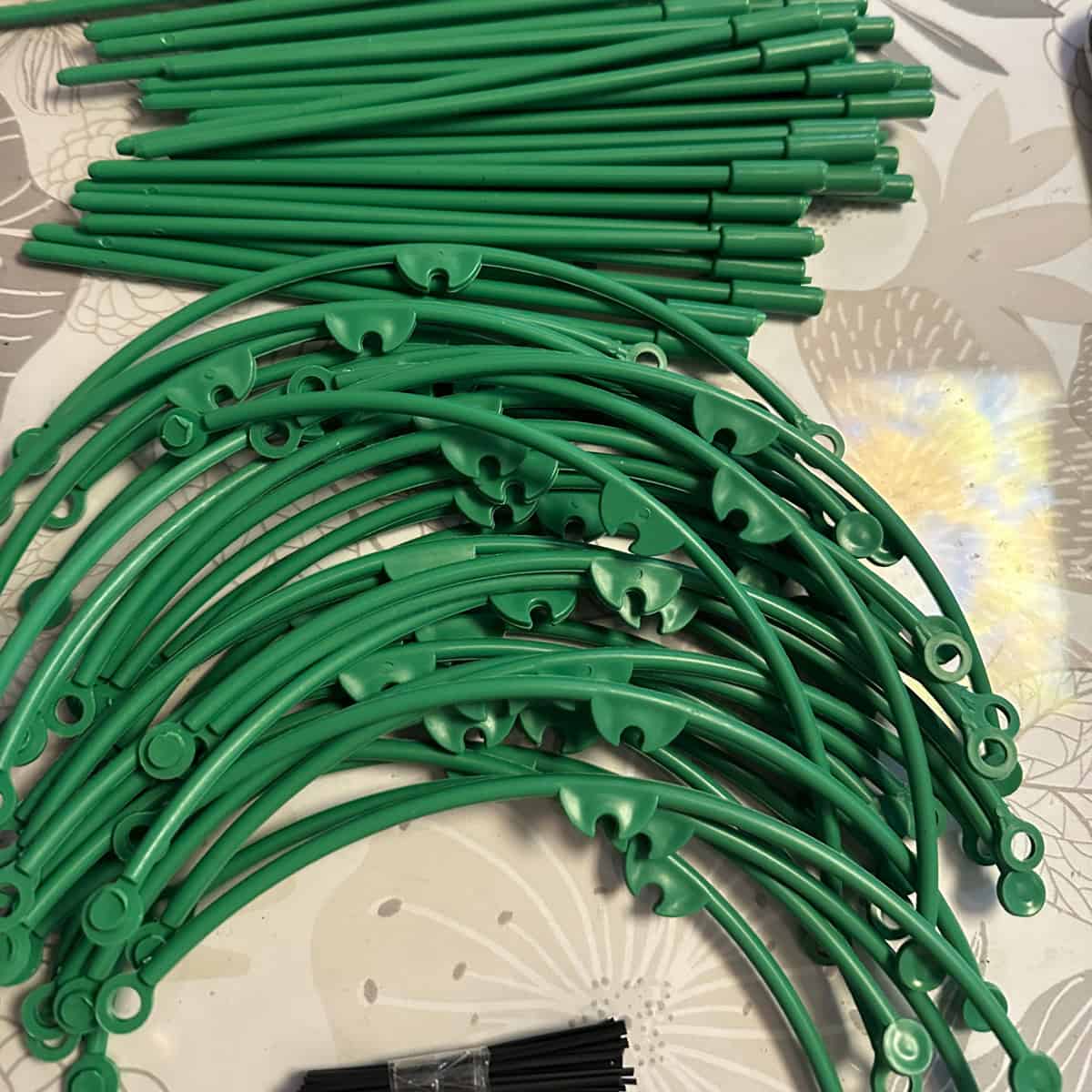
plant tomato frame
velcro strips for plants optional
Please note these are affiliate links through Amazon (affiliate), and at no additional cost to you, I will earn an affiliate commission if you decide to make a purchase.
$2.00 - it was just for the plant tomato frame. The one I bought came with a bunch of them. I used many of them for my garden vegetables (Check out my garden posts below for more details.)
A Well-Organized Vegetable Raised Bed Garden with Example
How to Make a Two-Tier Raised Garden Bed
It took me about half an hour to do this round Philodendron topiary project.
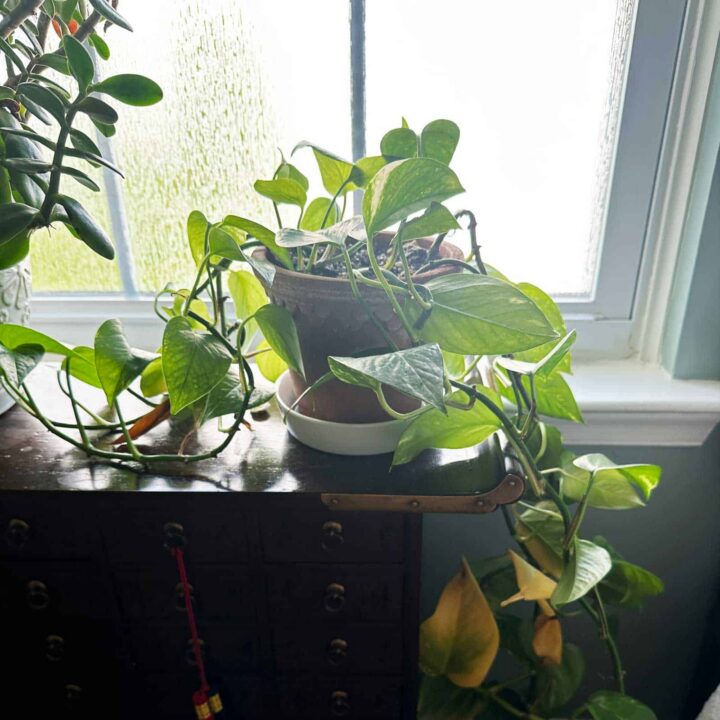
BEFORE Philodendron Topiary
Now, below is what the plant looked like before I added my Round Philodendron topiary.
How did I make this Philodendron Topiary?
Time needed: 30 minutes
Firstly, let me share the instructions for making this Round Philodendron Topiary.
- Prep the plan
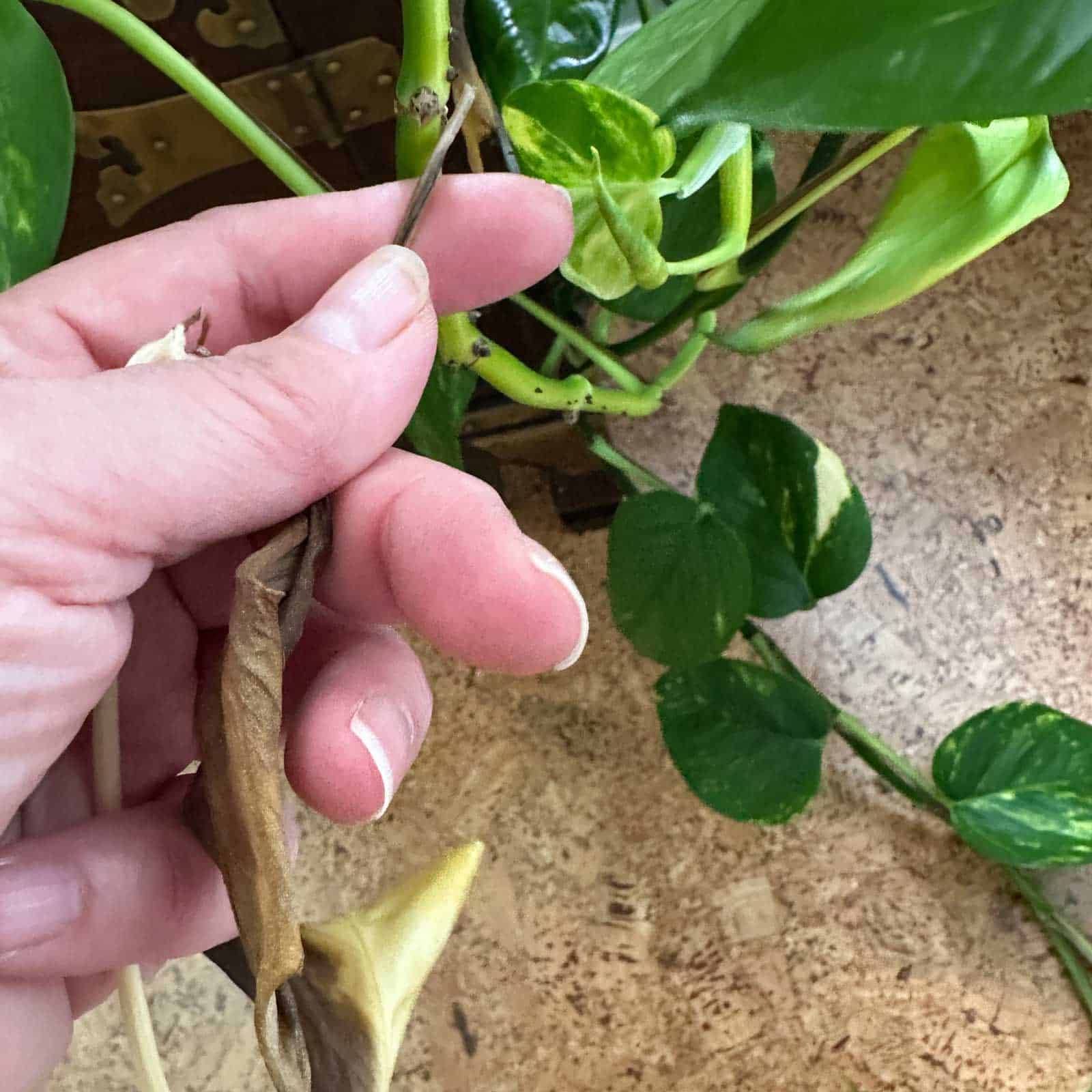
First, have a pot that is about 8 inches wide or less. The Philodendron should be longer and can easily be moved around. Remove any of the dead leaves.
Next, straighten out the Philodendron branches so they are not tangled.
- Set up stakes
Then, I set up the frame and made sure the stakes would fit inside the pot. This one had three stakes that needed to be placed.
- Add the stakes and circles to the pot.
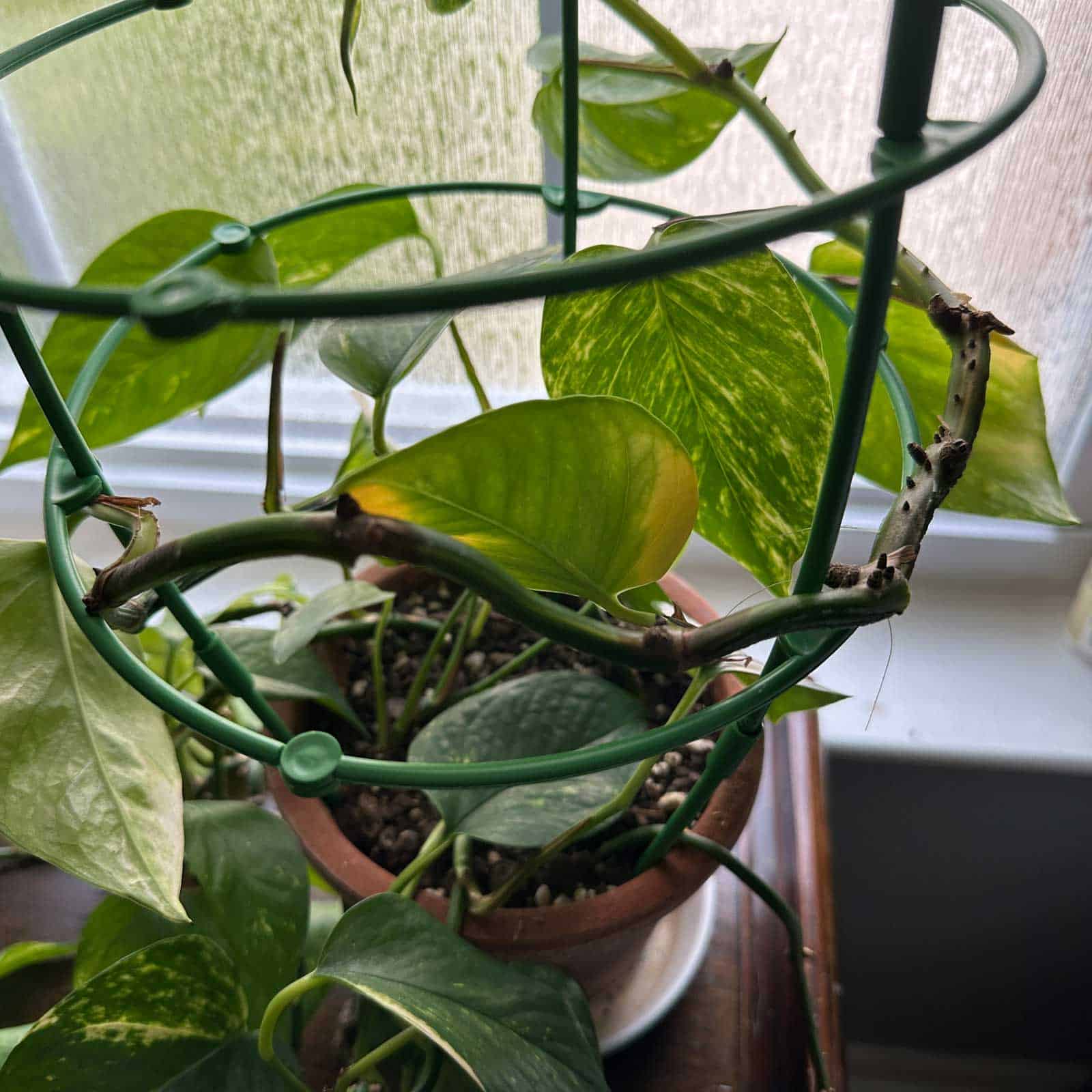
First, place the stakes so they line up with the circle. I clicked on the two circles to the stakes. - Weave the Philodendron branches around the stakes and circles
Now, starting from the bottom, take a Philodendron branch and twist it around the bottom circle, then weave it around the second circle. And set it at the top circle. Afterward, I did the same with the other ivy branch.
If it didn't stay, I would cut a piece of Velcro strips to hold the Philodendron sections in place. I didn't need to do that as much with this plant. - Adjust the Philodendron leaves
Next, I adjusted the Philodendron leaves.
Make sure they were tucked behind the Philodendron branches so they could begin to grow.
The Big Reveal
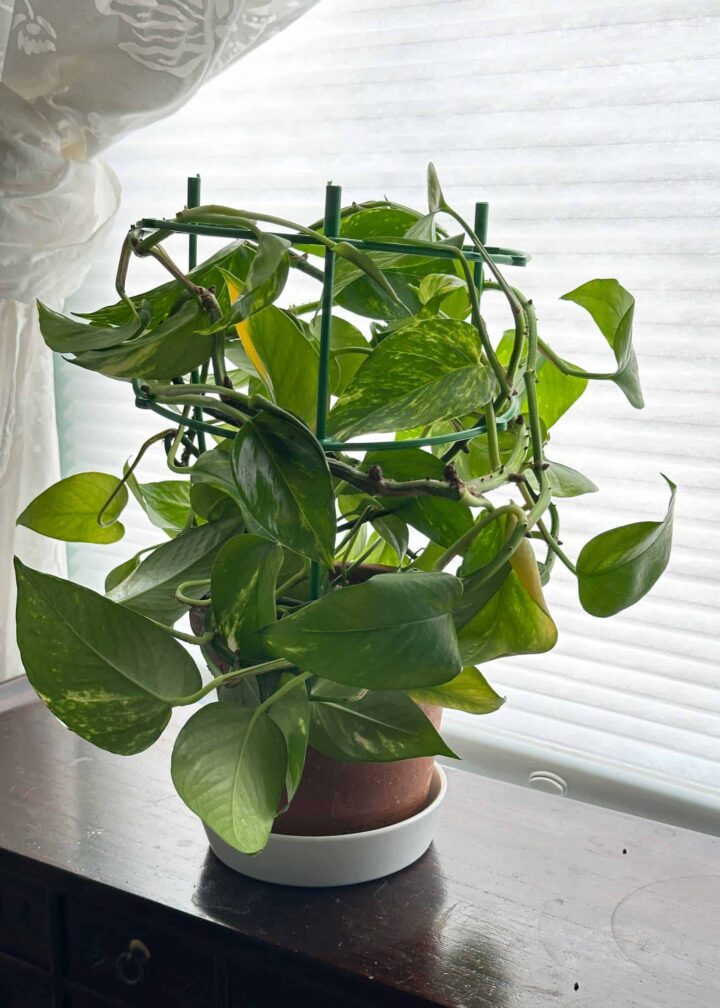
This Round Philodendron Topiary looks lovely. It looks really cute.
Note: since this Pothos house plant is much stiffer than English ivy, I found that this direction worked much better than a vertical circle-topiary option.
Tips on making this Round Philodendron Topiary
Here are some tips to consider before starting this ivy topiary project.
- The Ivy must be healthy. Make sure the plant has been watered well and that the branches are not brittle or dried out. This will make it difficult to bend the ivy branches around the stakes and circle.
- Adjust leaves. Be sure to pull out the leaves so they are not blocked by any vines.
- Be careful with thicker vines. Ivies vary, so if you purchase a thicker vine ivy, you will need to make a wider circle around the frame, or it will break.
Topiary Maintenance
To keep your topiary looking lovely rather than like a jungle, follow these steps.
- Rotate the ivy around every week or so when watering. This will eliminate any dead leaves that may not have received enough sunlight.
- If you need to fill the ivy, try pinching off the very tip of a growing vine. This tells the plant to grow two new stems from the nodes to help fill in the frame faster.
- Be sure to have the appropriate light for your ivy, so it doesn't dry out.
- Ivies in topiary form may need a little more humidity than other plants. Be sure not to store near forced air vents or fans.
FAQs
Feel free to check out the frequently asked questions about this tomato cage ivy topiary.
There are several of them. Below are just some that worked well.
English Ivy
Algerian Ivy
Irish Ivy
Japanese Ivy
Swedish Ivy
Heart-Shaped Ivy
Heartleaf philodendron
Philodendron cordatum
Keep in mind that the shape you use and how tight it is may depend on the type of ivy you use for your topiary.
Water your topiary when the top inch of soil feels dry. Most ivies prefer consistently moist but not soggy soil. During the warmer months, you may need to water more frequently, especially since the topiary form exposes more of the plant to air circulation, which dries it out faster.
Yes, you can use a metal tomato cage. Just keep in mind that metal cages are typically larger and may need to be trimmed down with wire cutters to fit a smaller pot. The plastic frames tend to be easier to work with indoors because they're lightweight and already sized for smaller containers.
You can, but your plant will need vines that are long enough to wrap around the frame at least once. A more mature plant with longer trailing vines will give you a fuller look right away. If your plant is still small, you can set up the frame and train the vines as they grow.
Pinch off the tips of growing vines regularly to encourage branching. This helps the plant fill in the frame more evenly. You can also gently reposition vines to cover any bare spots as they grow.
It can! As I noted with the Golden Pothos, other trailing plants can work too. Just keep in mind that thicker or stiffer vines may need a wider frame. Plants like philodendron or creeping fig are worth trying, though traditional ivies tend to be the most flexible for tight weaving.
I hope this post inspires you to repurpose items in your garden to help your indoor plants. Please leave a comment below and share with others. I would love to hear from you.
Below are other indoor plant care projects! Feel free to check them out.