
Did you look in your medicine cabinet and feel like you are looking at a graveyard of good intentions? The hydrogen peroxide was three moves ago and never used. The thermometer still has dead batteries in it. And somewhere behind the floss you forget to use sits a tube of ointment with an expiration date. Today, we are going to stop all the madness.
From my experience with clients, most people use their medicine cabinet as a place to store things, but never look at it again. Until a person comes in, like me, and helps them stay accountable to these visited spaces.
Expired products lose potency, change chemical composition, and in some cases, become breeding grounds for bacteria. It is a risk no one should take, especially in an emergency.
Jump to:
- First things you need to do before purging the medicine cabinet.
- Throw These Over the Counter Medicines that Stop Working
- 1. Pain Relievers
- 2. Cold and Flu Medications
- 3. Allergy Medications
- 4. Topical Treatments
- 5. Hydrocortisone Cream
- 6. Acne Treatments
- 7. Diagnostic Tools
- 8. First Aid Supplies
- How to Make a DIY First Aid Kit for the Home
- 9. Eye Care Products
- 10. Contact Lens Solution
- 11. Ear Drops
- 12. Personal Care Items
- 13. Throat lozenges and cough drops
- 14. Nasal Sprays
- 15. Old Toothbrushes
- FAQs: 15 Expired Items to Toss from Your Medicine Cabinet Right Now
First things you need to do before purging the medicine cabinet.
There are things you need to do before purging this area. Below, I have broken it down as I would for my virtual and in-person home organization clients.
Gather bags and label them
Depending on how many medicine cabinets you have, you may need several of these bags for this purging process.
A garbage bag: This would be for any trash, wrappers, etc that can't be recycled.
A paper bag: This would be for prescription drugs that need to be brought to the pharmacy for proper disposal. I like to use paper bags for this purpose because they will not accidently be thrown in the trash. And, labeling paper bags is easy with a Sharpie (affiliate) marker.
Other things you need to do before trashing the medicine cabinet items.
To protect your privacy, be sure to remove your personal information from the medicine. You can use a Sharpie (affiliate) marker to black (affiliate) out your information and numbers, or rip it off and shred it.
Throw These Over the Counter Medicines that Stop Working
Here's what you need to pull out, check, and throw away if expired right now.
1. Pain Relievers
What does this mean?
Where to Toss Pain Relievers?
2. Cold and Flu Medications
What does this mean?
Where to toss expired Cold and Flu Medications?
3. Allergy Medications
Where to toss expired Allergy Medicine?
Dispose of expired allergy medicine (pills, liquids, creams) at a legal location you can find on the Take Back Day website, or at a local pharmacy (CVS, Walgreens) or police station.
4. Topical Treatments
Where to toss expired Topical Treatments?
5. Hydrocortisone Cream
Where to toss expired Hydrocortisone Cream?
6. Acne Treatments
Where to toss expired Acne Treatment?
You can toss it the same way as the Hydrocortisone Cream instructions above.
7. Diagnostic Tools
These would be test strips that rely on chemical reactions and calibrated components that degrade silently over time.
Thermometers with Dead Batteries
Where to toss expired Digital and Mercury Thermometers?
For digital thermometers, remove the batteries first for separate recycling, then drop the thermometer off at electronics recycling locations (such as Best Buy or Staples), or local household hazardous waste collection facilities.
Diabetes Test Strips
Where to toss expired Diabetes Test Strips?
They should be handled like biohazardous waste. Use sealed, heavy-duty plastic bottles (like laundry detergent bottles) for disposal rather than regular household trash. Read more about how to dispose of these items here.
8. First Aid Supplies
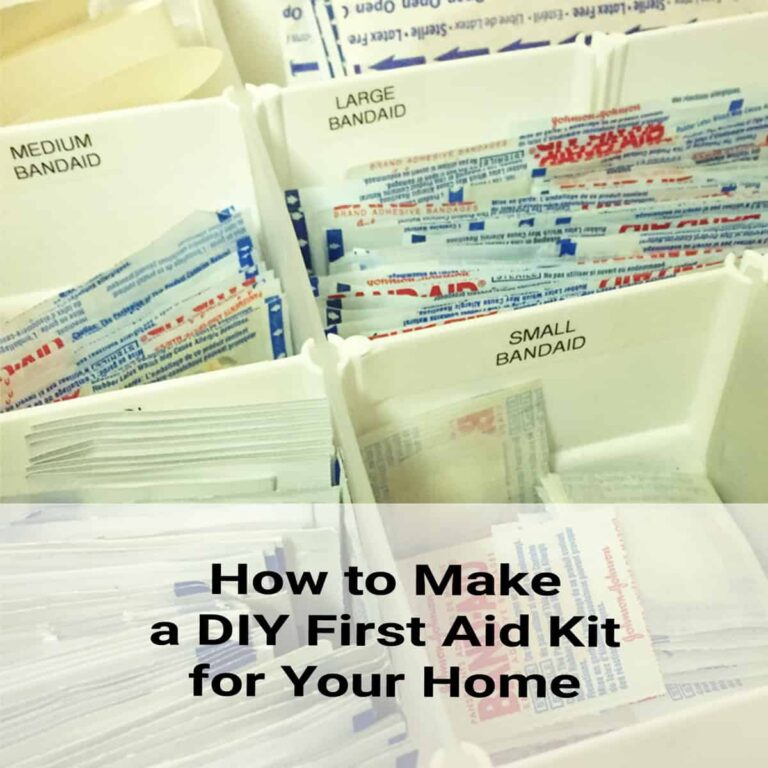
How to Make a DIY First Aid Kit for the Home
Recently, my daughter injured herself, and if not for this First Aid kit, it would have been much more challenging to help her. A DIY First-Aid kit for the home gives you the peace of mind that, if something happens, you can at least take care of it immediately without worry. I will share
Where to toss expired First Aid Supplies?
You can toss these first-aid supplies into the pharmacy take-back kiosks. Place the sharp items in a dedicated rigid sharps container or a thick plastic bottle, and consult local regulations for pickup.
9. Eye Care Products
Where to toss expired Eye Care Products?
If you can't remember when you opened a bottle, throw it out. Most of these items can be dropped off at the pharmacy, DEA-authorized take-back locations, or police stations.
10. Contact Lens Solution
Where to toss expired Contact Lens Solution?
11. Ear Drops
Where to toss expired Ear Drops?
Expired ear drops should be disposed of at a drug take-back location-such as a pharmacy (CVS) or local police department. If no take-back program is available, mix the liquid with an unappealing substance, such as coffee (affiliate) grounds or cat litter, seal it in a container, and place it in the trash as mentioned above.
12. Personal Care Items
Sunscreen, hydrogen peroxide, and rubbing alcohol are products you use daily or weekly, and have expiration windows that most people ignore. All these items have expiration dates on them and should be adhered to strictly.
Where to toss expired Sunscreen, Hydrogen Peroxide, and Rubbing Alcohol?
You can bring these items to a local household hazardous waste (HHW) drop-off location or specialized municipal collection event. For small quantities, hydrogen peroxide and rubbing alcohol can sometimes be flushed down a sanitary drain with water, while sunscreen, once emptied, can be recycled if it says so on the bottle.
13. Throat lozenges and cough drops
These items are sticky and discolored when they are expired. The wrapper will also be broken or torn on older packaging.
Where to toss expired throat lozenges and cough drops?
You can dispose of these items at pharmacy kiosks, at take-back days, or in the household trash in a sealed bag with coffee (affiliate) grounds, dirt, or cat litter. Do not flush these items.
14. Nasal Sprays
The next one is nasal sprays. These items need to be trashed after you stop using them. They should not linger.
Where to toss expired Nasal Sprays?
They should be disposed of at dedicated drug take-back locations, such as pharmacies (CVS, Walgreens), police stations, or hospitals, which often have secure kiosks.
15. Old Toothbrushes
This last one is old toothbrushes. Sometimes we keep these items when we move on to an electric one or replace them. It needs to go.
Where to toss expired Old toothbrushes?
You can sign up for TerraCycle (via Colgate) or Oral-B's recycle on Us program. Then you mail the items back to them for proper recycling.
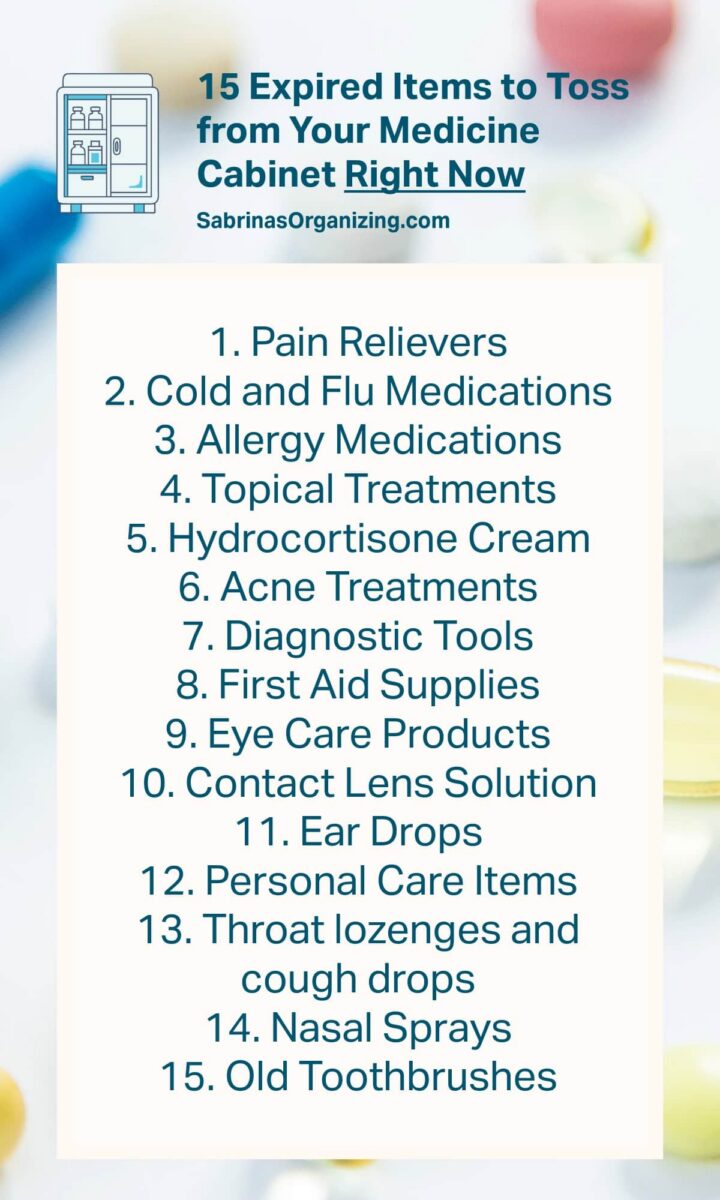
Well, I hope this list of expired items hiding in your medicine cabinet that need to be purged helps you figure out what needs to go and what can stay.
Take 20 minutes today to go through everything, check dates, and clear out what's expired. You'll have room for products that actually deliver what you need, and you'll stop second-guessing whether that medication or treatment is working because you'll know it's fresh and effective.
FAQs: 15 Expired Items to Toss from Your Medicine Cabinet Right Now
I recommend going through your medicine cabinet at least twice a year, ideally in the spring and fall when seasons change. This lines up well with daylight saving time, so it's easy to remember.
If you have a larger family or a lot of prescription and over-the-counter products, a quick quarterly check-in is even better. Taking 20 minutes every few months keeps expired items from piling up and makes sure that when someone actually needs medicine, it's fresh and effective.
In most cases, expired over-the-counter pills like pain relievers and allergy medicine don't become toxic, but they do lose potency. That means you may be taking a dose that no longer delivers the relief you're expecting, which is a real problem when a child has a fever or you're dealing with a migraine.
Liquids, creams, and eye drops are a bigger concern because they can grow bacteria or change chemical composition. When in doubt, toss it and replace it.
Even though we all call it a medicine cabinet, the bathroom is actually one of the worst places to store medicine. Heat and humidity from showers break down active ingredients much faster than normal room temperature.
A better choice is a cool, dry spot, such as a high shelf in a linen closet, a dresser drawer in your bedroom, or a locked box in the kitchen, away from the stove. Just make sure it's out of reach of children and pets.
For the most part, no. Flushing medicine can contaminate the water supply, and it's not the recommended first choice. The best option is a drug take-back program at a pharmacy like CVS or Walgreens, a police station kiosk, or a DEA Take Back Day event.
If none of those are available and the medicine isn't on the FDA flush list, mix it with something unappealing like used coffee grounds or cat litter, seal it in a container, and put it in your household trash.
Never throw a mercury thermometer in the regular trash, and never try to clean one up yourself if it breaks. Mercury is toxic and releases vapor that needs professional handling.
Contact your local household hazardous waste (HHW) facility for drop-off instructions, or check with your municipality for a collection event.
Some pharmacy take-back programs also accept them. If you still have a mercury thermometer, replace it with a digital one as soon as possible.
Grab a permanent marker and write the date you first opened the bottle right on the label.
Most opened eye drops should be tossed 30 to 90 days after opening, and opened tubes of ointment should usually be used within a year, regardless of the printed expiration date.
Writing the open date takes five seconds and removes all the guesswork later. This is one of the easiest habits to build, and it helps you avoid using something that could irritate your eyes or stop working.
Before tossing any prescription bottle or packaging, remove your personal information.
You can use a black permanent marker to scribble out your name, address, and prescription number, or peel the label off and shred it.
I like to collect prescription items in a labeled paper bag during a purge, so nothing accidentally ends up in the regular trash with my info still readable. Taking this extra step protects you from identity theft.
Once you've tossed everything expired, group what's left by category so you can actually find things when you need them.
I like to use small, clear bins or drawer organizers for categories like pain relief, cold and flu, first aid, and personal care. Keep everyday items at eye level and less-used items on higher or lower shelves.
Label the bins so anyone in the family can find what they need quickly, and do a quick scan each time you restock so expired items never build up again.
Now it is your turn? Please leave a comment on the last time you went through your medicine cabinet. What did you get rid of that you didn't realize you still had? I would love to hear from you.
Decluttering advice posts






Julie Bestry says
My first thought was how much I love decluttering a client's medicine cabinet; it's up there with spice racks for my favorite "easy" decluttering jobs. (Paper is my specialty, but jobs like these are so rewarding because so much ends up "going" that you feel like you're making a real dent when a space hasn't been decluttered in eons.) My second thought was how grateful I am that my own pharmacy has switched to easy peel-off labels, so I can discard an empty bottle in a matter of seconds — peel, crumple, toss!
My feeling about ibuprofen (and all drugs) is how I feel about almost all expiration dates; I toss everything when it's past the expiration date, and most things when it passes the "best by" date. I'm persnickety that way; I'd rather throw away something ingestible when it's still good than risk it.
I love the idea of Take Back Day, but here, they start dismantling the booths by 1 or 2p on a Saturday, and this morning-hating girl is simply not out in the world by then. I do, however, often visit the sheriff's department's machine/kiosk for turning in expired/unused meds. You can usually find these types of locations on the same Take Back Day website.
With thermometers, it's my belief that unless you have a SUPER-fancy one, it's not worth replacing the batteries because it's almost the same price to just replace the battery-operated thermometer, and then you don't have to guess whether the problem is the batter or the actual device. (And I'm pretty sure I still have a circa-1970 mercury thermometer in the First Aid box I took to college; thanks for the reminder to send it safely on its way!)
Great reminders! Thanks for putting this all in one place!
Sabrina Quairoli says
Thanks for stopping by and commenting, Julie. It is amazing to me that while we are in the same country, each state does Take Back Day a little differently. Our pharmacy doesn't use the easy-to-remove labels yet, but they will take back many of the medicines in their store.
Jonda Beattie says
I gather up expired meds from my clients and take dispose of them during the take back drugs day. A couple of weeks ago I came home with an entire white trash bag of expired meds. Liquid meds are not accepted.
I have found that in the past few years, the labels on prescriptive meds peel off rather easily - at least enough that it is unreadable.
For my own home, I schedule a yearly check on meds.
Sabrina Quairoli says
Interesting. We haven't experienced that. I did find that we can pour some down the drain and rinse the bottle out and recycle them.
Seana Turner says
Reading this makes me realize all the stuff we need to keep on living LOL!
I appreciate how you gave a point of view here on what is dangerous after expiration and what may just be losing efficacy. I've known a couple of people with eye issues and I've become convinced not to mess around with anything you put in your eyes. An infection is very easy to get, and can come on quite suddenly. If you ever have an eye issue, don't sit on too long!!
Our town police department will take pills, but not liquids, so very helpful information here. Will be pinning!
Sabrina Quairoli says
Thanks, Seana, for stopping by and joining in the conversation!
Linda Samuels says
This is such a helpful list, Sabrina. I appreciate your suggestion to review the contents of the bathroom cabinet regularly. As you said, when you need a specific med, you don't want to reach for something expired.
When I was little, we had those mercury thermometers. A few times they broke, and that mercury bubble 'got out.' I was fascinated by it and remember picking it up to play with. Thankfully, nothing happened to me. Now I know better. It had such a cool texture and movement pattern. We have digital thermometers now. Much safer and more accurate.
Sabrina Quairoli says
Yes, I get it, Linda. While researching for this post, I was surprised at how toxic the mercury thermometers are and am so glad they took them off the market. If they brake, it is very harmful for the air quality in the home. It is so much better to have electronic ones. Thanks for stopping by and commenting.
Janet Barclay says
My pet peeve is how you have to buy a package of 12 or 24 pills and only use a few before they expire. On the other hand, our pharmacy takes back pills all the time, so we don't have to figure out where and when to dispose of them!
Sabrina Quairoli says
I get that, Janet. I agree. It is frustrating and such a waste. Thanks for stopping by and commenting.