Spring is in the air. Everyone is opening the windows to let in the fresh air. And we are all getting the itch to declutter and clear out the dust in our rooms from the winter months. Spring cleaning is a time to take action to clear those unwanted things and dust under areas that haven't been looked at since last fall.
As a busy parent or homeowner, the very idea of spring cleaning can feel overwhelming. Where do you even start? How do you fit it in? The good news is, spring cleaning doesn't happen just in one weekend. Well, it can, but boy, will you be exhausted after you are done! I like to do these tasks over several weekends or even a bit each day. Doing these tasks as a part of the day over the next 30 days or longer will help manage the time more efficiently.
In this comprehensive guide, I am pulling together everything you need: why spring cleaning matters, how to build your own customized checklist (affiliate), the exact process to follow room by room, 8 important places to deep clean, unique yearly chores you shouldn't skip, and a full 30-day challenge to spread the spring cleaning out and actually finish. Let's start spring cleaning!
Jump to:
- Key Takeaways
- Why Spring Cleaning Matters - And Why a Checklist Changes Everything
- When Do You Need to Spring Clean?
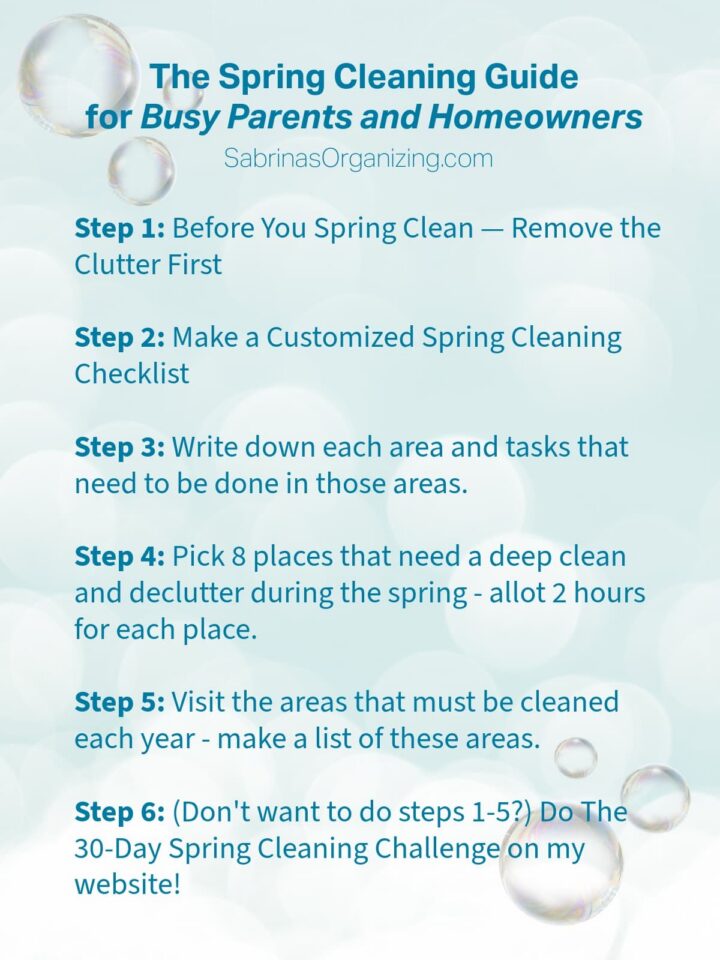
- Step 1: Before You Spring Clean - Remove the Clutter First
- 8 Important Places To Deep Clean This Spring
- Step 2: How to Build Your Own Customized Spring Cleaning Checklist
- How to Create a Customized Spring Cleaning Checklist
- How to Keep Your Refrigerator Organized
- How to Transform A Refrigerator Drawer Like A Pro
- How to Maximize Space in Your Refrigerator with Zones
- Top 20 Pantry Organizing Tips Your Family Will Love
- How To Keep Your Pantry Organized Forever
- What to Keep In Your Organized Pantry
- Pantry Organizing Monthly Challenge Made Easy
- Super Easy Playroom Organizing Tips
- 8 Areas To Make An Amazing Child Playroom
- How to Make a Fabulous Kids Playroom
- Amazing Toy Organizer Ideas to Get Your Playroom Organized
- Laundry Room Cleaning Tips And Tricks
- How to Make a Basement Laundry Room Closet Organized
- How to Increase Space using Shed Organization Tools
- What to Keep in Your Shed to Stay Organized
- How To Make An Effective Spring Cleaning Process
- 30 Days Spring Cleaning Challenge
- Frequently Asked Questions: Effective Spring Cleaning for Busy Parents and Homeowners
Key Takeaways
- Spring cleaning can feel overwhelming, but breaking tasks into manageable chunks over weeks or months helps.
- Creating a customized checklist (affiliate) ensures you remember all important tasks and allows for easier organization.
- Spring cleaning improves air quality and helps detect issues in neglected areas of your home.
- Focus on spring cleaning specific areas like bedrooms, kitchens, and outdoor spaces for thorough organization.
- Consider the 30-Day Spring Cleaning Challenge to make the process less daunting and more achievable.
Why Spring Cleaning Matters - And Why a Checklist Changes Everything
Spring cleaning is all about deep cleaning. We don't always deep clean every week. We may be tired or busy. Spring cleaning involves using a wet cleaning method - whether with soap, water, and white vinegar or with a cleaner - as we go through each area of our home from the top down, then revisit every area to make sure it is taken care of. Sounds like a lot of work, right? Yes, it is. But we can do it.
Spring cleaning is also excellent because your house smells clean - but the purging and organizing process that goes along with it makes it more compelling. Taking time to deep clean will reduce dust build-up and improve air quality in your home. And while you are cleaning, you can diagnose any possible issues in areas you haven't looked at in a while.
Benefits
I would ALWAYS forget to visit something in my home while doing this task each year. That is exactly why creating a customized spring cleaning checklist will help you stay on top of every task. Here are five key (affiliate) benefits of having a checklist (affiliate):
- It will help you remember all the detailed tasks you may not do every season.
- It allows you to break down the list into easy-to-manage chunks of activities, which you can then spread out over a month or two.
- Taking time to deep clean will reduce dust build-up and improve air quality in your home.
- While cleaning, you can diagnose any issues in areas you haven't checked.
- You can refer to the customized deep cleaning task list each year to see what needs to be completed.
These benefits will not only help you but also keep your family and home on top of things you may forget throughout the year. By creating this list now, you will be ready to start as the weather improves.
When Do You Need to Spring Clean?
As the name implies, spring is an excellent time because the house has been closed for several months and needs fresh air. But if you don't want to clean only in the spring, you can split the tasks between spring and fall, since these are the two times each year when we prepare for summer or winter.
You may be asking why I need to do deep cleaning this time of year. I find it helps clear the home of items that may have gotten stuck over the winter. So, making a point of going through these areas once a year will draw attention to them and let me decide whether I need the items or can go without them. Doing this allows me to see my home differently and freshen areas that were just not being looked at.
It is a good idea to do some of these tasks every weekend; by the time summer arrives, you will have cleared out and cleaned all the areas of your home.
Step 1: Before You Spring Clean - Remove the Clutter First
Remember, before spring cleaning your home, remove any unwanted clutter. Clearing out the cluttered closets, under the bathroom sinks (affiliate), in basements, in the garage (affiliate), and in attics are great places to start.
Spring cleaning is excellent, and your house smells clean, but the purging and organizing that go along with it make it even more compelling. Eliminating clutter will also help cut down on cleaning.
Here is a helpful tip from the 8 Important Places to Deep Clean This Spring post: when you clean out your closet (and the kids' closets), get rid of anything faded, torn, or no longer in use. When in doubt, put it in a box marked "Clothes to get rid of," then place it in another room or garage (affiliate).

8 Important Places To Deep Clean This Spring
While looking at my backyard, noticing the buds on the trees, the flowers emerging from the ground, and the grass turning bright green, I was reminded that spring would be here soon, and it was time to do some deep cleaning.
Step 2: How to Build Your Own Customized Spring Cleaning Checklist
Each home is unique, so your spring cleaning list should be, too. This list of items is not intended for you to do in one day. You can easily break it down into weeks or even months. The pace is up to you and your family.
Start with a Pen and a notepad
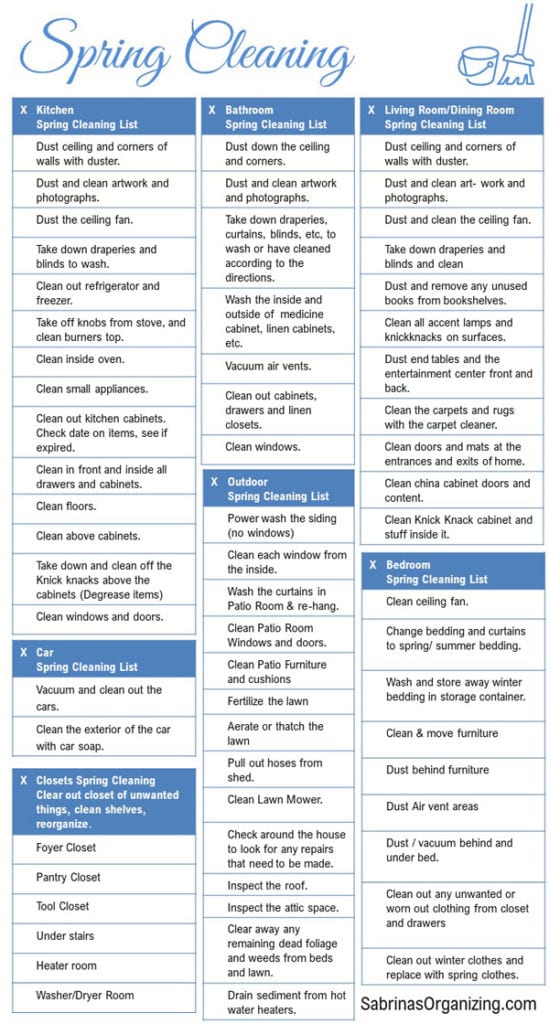
First, write down the deep cleaning tasks for each room. Add the room name and the tasks beneath the specific room. If they are the same tasks, make a note of them and copy them to the other room column. Make sure to include a list of jobs you do from the ceiling to the floor. Things like clean fan blades and dust wood molding would be first, while cleaning the vents and floor would be last.
Rooms and Areas to Add to Your Spring Cleaning List
Below is a list of the rooms and areas to add to your spring cleaning list:
- Home Office
- Living Room
- Dining Room
- Family Room
- Laundry Room (affiliate)
- Outdoor
- Shed (affiliate)
- Bathroom(s)
- Bedrooms
- Kitchen
- Basement
- Garage (affiliate)
- Attic
- Sunroom
- Foyer / Entryway
- Mudroom
- Cars
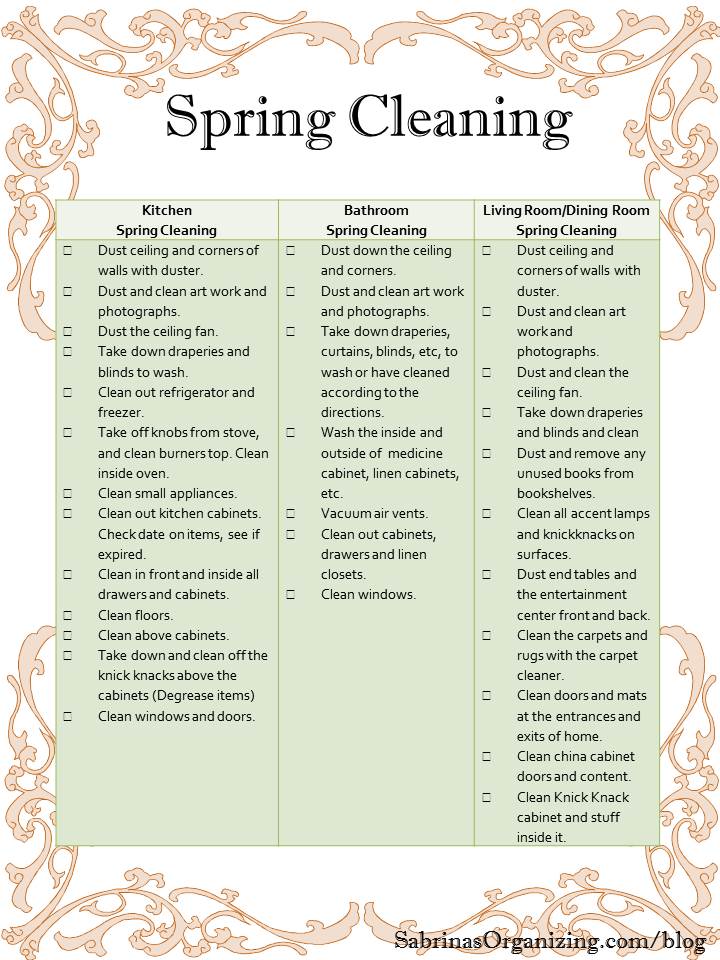
No Project Task Should Be Too Large
Create tasks that are 2-3 hours long or shorter. This will help you easily fit the task over the weekend. Some places can be subdivided because of the number of tasks that need to be done. For instance, the Kitchen can be divided into three different functions to make handling easier - upper cabinets, lower cabinets, and drawers. The bedroom (affiliate) closet and the bedrooms are separated because there are usually many items to go through in both areas.
Add a "Due By" Date Column
After you write the task or complete a room spring cleaning checklist (affiliate), you can add the "due by" date column. This will allow you to break down the tasks for easier completion.
Type the Checklist Up on a Shared Document App
So you do not need to write it up every year, use an app like Google Sheets, Microsoft Excel, Microsoft OneNote, or Evernote so you can refer to it each year. These applications have a to-do box that makes it easy to check off completed tasks. Plus, you can share them with family members and assign them tasks. It's a win-win! =)
Revisit the Checklist Each Year to Modify Tasks
After you complete your customized checklist (affiliate), make a note in February to revisit it and add any updated tasks that need to be completed. Think about the things you did to improve your home the past year, do these areas need to be cleaned differently? This will help you keep your checklist (affiliate) relevant from year to year and remind you of upcoming jobs. If I need to add to the checklist, I like to jot down tasks I may have missed on the back and update them after the chores are done or before the next spring begins.

How to Create a Customized Spring Cleaning Checklist
As spring approaches, creating a spring cleaning checklist personalized to your home and family is a great time. Doing this will make it easier to complete all the necessary tasks without missing anything. But why should you create a customized spring cleaning checklist?
Step 3: The Spring Cleaning Process - How to Clean Each Area
Having a plan and deciding how much you want to do each time you take on a spring cleaning task is essential. When you start with a plan, you build momentum because you don't have to decide what to do next.
Each room will be cleaned the same way, using the following method:
Clear out and Purge - Clear out each cabinet, closet, etc., of items you don't want or haven't used. By pulling everything out of the area, you will see what you have and decide what needs to go.
Dust the shelf or cabinet and return the kept items.
Remove the other items and bag them and bring them to your garage (affiliate), or car/truck for donation or recycling/trash.
Dust the area from the ceiling down the walls to the baseboards. This includes wet dusting blinds or cleaning curtains. Don't forget the chandelier, ceiling fans, and other items hanging from the ceiling. Then, clean the other surfaces till you reach the floor. Next, do a wet clean on the floor. Remember, gravity is your friend. =)
That's it! But wait - there are still some other areas that need to be cleaned, too. Read on for those unique yearly tasks below.
Step 4: 8 Important Places to Deep Clean This Spring
While looking out at my backyard, I noticed the buds on the trees, the flowers emerging from the ground, and the grass turning bright green, and I was reminded that spring would be here soon. It was time to do some deep cleaning. These areas don't need much cleaning or decluttering. Once a year is usually enough for us to get rid of the mess. Follow along and make your own spring cleaning task list.
1. Bedrooms and Closets
Clean out your closet (and the kids' closets) and replace the items with your lighter spring clothing. Get rid of anything that's faded, torn, or no longer fits. When in doubt, put it in a box marked "Clothes to get rid of," then place it in another room or garage (affiliate). If you do not go in the box for at least two months, you can donate or give away the entire box - done and done!
Change the bedding to lighter ones, then wash the thick blankets (affiliate). Spring cleaning aims to remove excess dust from your home. Blankets (affiliate) trap a lot of dust, so cleaning them every few months works well. This time of year is great for this task.
Clean ceiling fans and dust baseboards and molding. These areas accumulate dust all winter long.
Move furniture and vacuum (affiliate) under them. You may be surprised at what you find!
2. Shared Spaces - Living Room, Dining Room, and Kitchen
Living Room
Dust the floor under furniture and move furniture around your rooms. Then get your carpets cleaned. You may be surprised to find something you have lost. My mom and I would do this task each spring, and we found it very therapeutic. It allowed us to let go of the winter woes and make room for the new springtime change.
Take books and knick-knacks off the bookshelves (affiliate) and decide whether to keep them. Ask yourself, "Have I used this book in the last year or even three years?" If the answer is no, donate to the nearby library or used bookstore. Check out my post about where to donate books. Ask yourself, "Do I really need this knick-knack out all year long?" If not, consider donating or recycling it.
Clear cobwebs in corners and around recessed lights. A damp cloth works nicely, and I particularly like the telescoping cleaning brushes.
Dining Room
Clean the china cabinet by taking out everything and then wiping the shelves (affiliate). Mismatched dishes or serving utensils (affiliate) you no longer use are great to eliminate from your china cabinet.
Kitchen
Clean out the upper cabinets in your kitchen. Be honest with yourself; how often do you reach above your fridge or into the top cabinet space? Not often, correct? This area is a great place to get rid of clutter.
Empty the refrigerator and reorganize the space. Sort all the items by tasks. Use trays, lazy susans (affiliate), and containers to help you keep the space organized and easy to clean (affiliate). If you can place all the items in one bin, it is much simpler to clean the shelves (affiliate).

How to Keep Your Refrigerator Organized
Organizing your fridge can be a daunting task. Moving items around to find that one thing you need, then realizing that it had expired in the back of your fridge, is frustrating.
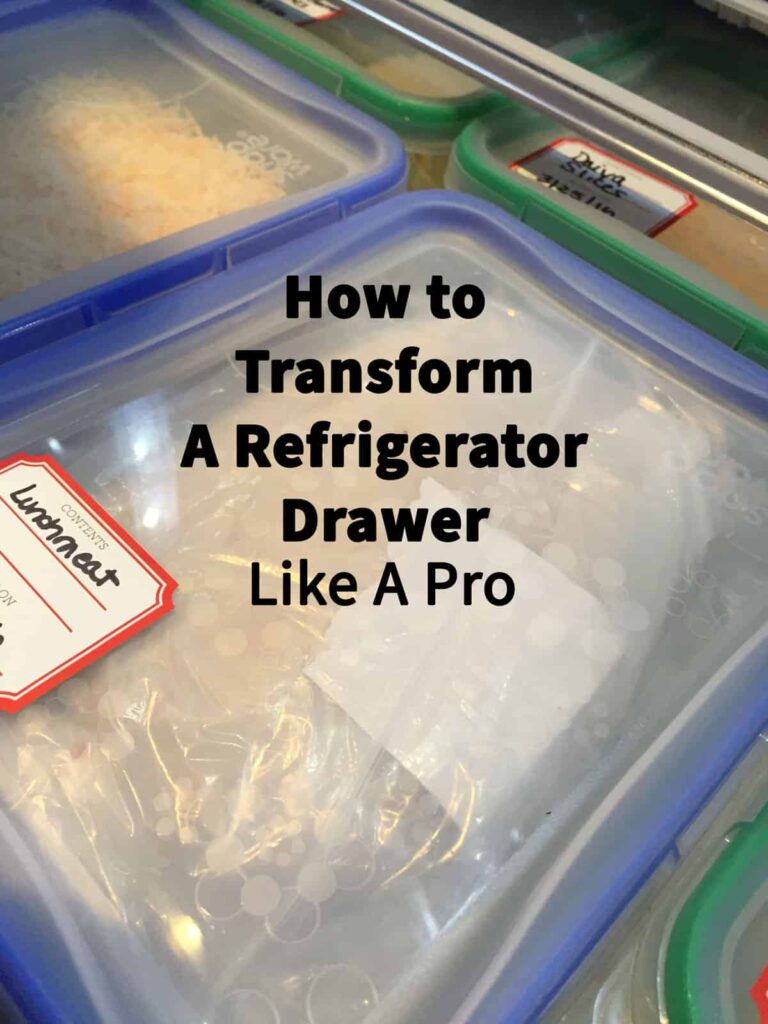
How to Transform A Refrigerator Drawer Like A Pro
A recent refrigerator purchase gave me a new dilemma - what to do with the wide deli drawer? If you look at refrigerators now, some have a super-wide "deli" drawer that typically features one or two dividers and limited flexibility. A

How to Maximize Space in Your Refrigerator with Zones
You probably know about creating zones in the kitchen, but have you ever created zones in your refrigerator? You may think, "Why must I make zones in my refrigerator?" It sounds a little OCD.
Clear out the pantry (affiliate) - especially if you have a deep pantry (affiliate). It is best to make meals from the pantry (affiliate) after finding items in the back of your closet. You can also make some interesting dishes.

Top 20 Pantry Organizing Tips Your Family Will Love
Pantries can get pretty messy, especially if you don't revisit it every few months. Since the pantry is a constantly modified and used space, having assigned areas in a pantry is very useful to keep the space organized.

How To Keep Your Pantry Organized Forever
Does this ever happen to you? Arriving home from the grocery store and placing all the pantry items away, you are so proud of how you organized it. You think to yourself, "This pantry looks great."

What to Keep In Your Organized Pantry
Have you ever walked into your pantry and said, "Where are my ….?" While rearranging cans and jars to find that one item, you make even more of a mess with all the other items. Feeling so overwhelmed.

Pantry Organizing Monthly Challenge Made Easy
This month's organizing challenge is to go through your pantry. This is where you may have food that was hidden and lost behind other larger items. This month is the perfect time to go through, purge, and organize. Tasks to do when purging your pantry Pantries come in different sizes and shapes.
Dust and clean the pictures on the walls. Take them down and dust the frames top, bottom, sides, and back.
Clean the trap and inside of the dishwasher. While you should do this every few weeks, thoroughly clean at least once a season.
Clean the oven. Cleaning the stove once a season works nicely.
3. Basement and Attic
Empty and purge items in your basement storage space. We tend to forget this place because it is the catch-all area we do not visit often. So, going here will affect your home. You will probably find items you never knew you still had. Check behind doors and on shelves (affiliate) behind boxes (affiliate) for items you can revisit and get rid of. It could be in closets in the basement as well.
4. Windows and Curtains
Change out curtains or remove them altogether. If you have curtains up for several months, they get pretty dusty. Taking them down and popping them into the dryer with a drier sheet will freshen them up. Washing them works even better to remove the dust if the fabric instructions recommend it.
Cleaning windows. I like doing windows when I take down the curtains. Doing this on a sunny day helps us see the spots - but no direct heat, please; it will get streaky.
Here's how we clean the windows:
After spraying the glass from the top down and saturating it, use a squeegee and start at the top-left corner, moving to the right corner.
When you reach the right corner, turn the squeegee and move down the window, making a tight zig-zag pattern while overlapping the rows.
Then, at the bottom, use a paper towel and wipe off the excess drips around the window and the bottom. It works well, and you don't need to work your shoulder too hard.
Pull out the screens and clean them with a hose, brush, dish soap, and water. Wash the inside and outside of the windows using a squeegee.
5. Kid Play Areas
Clear out the kids' toys, especially the gaming area. No one wants to do this too often, not even the kids. So, cleaning it out right before the kids finish school is an excellent time. They get to remember what they had, and you don't need to deal with it every few months.
Visit their clothing. If your kids are growing, this is also a great time to purge their clothing and donate it to others in need.

Super Easy Playroom Organizing Tips
If you have kids, you most likely have a room that looks like this. Yes, it seems crazy, but you also know kids love to make messes. This project was done with a client. She thought we were only going to work on this room in the two hours allotted for the session.

8 Areas To Make An Amazing Child Playroom
Setting up a fabulous playroom for the kiddos is the first thing when you want your kids' toys and stuff to be assigned to one room.

How to Make a Fabulous Kids Playroom
Children's Playrooms are so much fun to organize! They're one of my favorite places. There are no restrictions on how to do it, and kids are very flexible when it comes to their space.

Amazing Toy Organizer Ideas to Get Your Playroom Organized
Climbing over mounds of mixed toys can be dangerous, and just looking at them can make you feel overwhelmed. Stepping on those dreaded Lego pieces can also be painful. Plus, your kiddos may not even know what to enjoy. So, keeping the playroom organized is essential.
6. Laundry Room
Empty and clean the laundry area. Go through cabinets and remove any detergent or free samples you haven't used.
Schedule to have your dryer vent cleaned out as well. Search "Dryer Vent Service Near Me" to find someone near you. This is a fire safety task that should not be skipped!

Laundry Room Cleaning Tips And Tricks
The laundry room is the workhorse of most homes. This is where your clothes, floor rugs, shoes, window treatments, and cleaning tools are cleaned. Though it's not among the areas your visitors frequent, it is beneficial to keep it clean and well-organized.

How to Make a Basement Laundry Room Closet Organized
Some people have beautiful laundry rooms, while others have laundry closets located on the side of a guest room or in a basement that are not as visually appealing. I have a laundry closet, but I wish I had a laundry room.
7. Outdoor Spaces
Clear out your shed (affiliate) space. Make a list of items that need to be repaired or replaced, or of supplies that need to be replenished.
Bring out items used only in the spring and summer, such as hoses and water barrels. Uncover lawn furniture and clean off the dirt.
Weed mulch beds, then add new mulch for the season.
Prepare the lawn. Check lawnmowers and other tools (affiliate). Sharpen the mower blades as needed.
Clean and repair siding. Inspect the roof.
Clean the grill and garden beds.
Clean outside windows and clear out the garage (affiliate) of any unused items. Clear off surfaces and put away winter supplies.

How to Increase Space using Shed Organization Tools
Our shed is only 5 feet by 8 feet. It is the required size of a shed in our development. So, making it functional is very important. Recently, we reorganized and arranged the shed so that more things could be placed in it.

What to Keep in Your Shed to Stay Organized
It's time to do some Spring Cleaning. We will be going into our sheds and pulling out tools and equipment to get our lawns and patio ready for the summer. This is also a great time to do some shed organizing!
8. Office Spaces
Go through the papers that were left out and decide on them.
Clean out the drawers that may be overstuffed with papers going back years.
Visit my office spaces' spring-cleaning posts from my sister site, SabrinasAdminServices.com
9 Home Office Spring Cleaning Quick Tips
How to Easily Spring Clean Small Business Digital Files
How To Easily Spring Clean Your Cloud Files
Step 5: Unique Yearly Chores You Should Not Skip
Yes, there are some unique tasks that should be done yearly to help keep your home in tip-top shape. Here are the ones I recommend:
- Get carpets cleaned throughout the home. A professional cleaning will clean the carpet and the air, as they usually use a long hose to remove dirt from the house.
- Do the windows. Pull out the screens and clean them with a hose, brush, dish soap, and water. Wash the inside and outside of the windows using a squeegee.
- Reseal the grout in the kitchen to protect it from stains.
- Inspect your fire extinguisher. If it looks rusted or damaged, replace it.
- Get your appliances checked by a professional. Call and schedule an annual service checkup if you have a service agreement for your appliances.
- Clean the exhaust vents and replace the air filters. These are easy to forget.
- Go through medicine cabinets and dispose of any unused medication. Proper disposal matters.
- Change any light bulbs that have gone out. Spring cleaning is a great time to check these items.

How To Make An Effective Spring Cleaning Process
Effective spring cleaning can be complicated. All the detailed steps involved can make us forget a step or two. In this post, I will share how to create a spring cleaning process so you do not forget any step.
Step 6: The 30-Day Spring Cleaning Challenge
Struggling with all of this? If you don't feel motivated to do deep cleaning in your home, this section is for you! You do not need to do these tasks in this exact order. The list below can be completed when the weather or temperature is appropriate to do the task. Be patient and work through the 30 days of spring cleaning tasks, and you will complete them. Click below and visit the challenge directly on my challenge page.
30 Days Spring Cleaning Challenge
Spring cleaning doesn't happen just in one weekend. Well, it can, but boy, will you be exhausted after you are done. I like to do these tasks over several weekends or even a bit each day. Doing these jobs as a part of the day for the next 30 days or longer will help manage the time more efficiently.
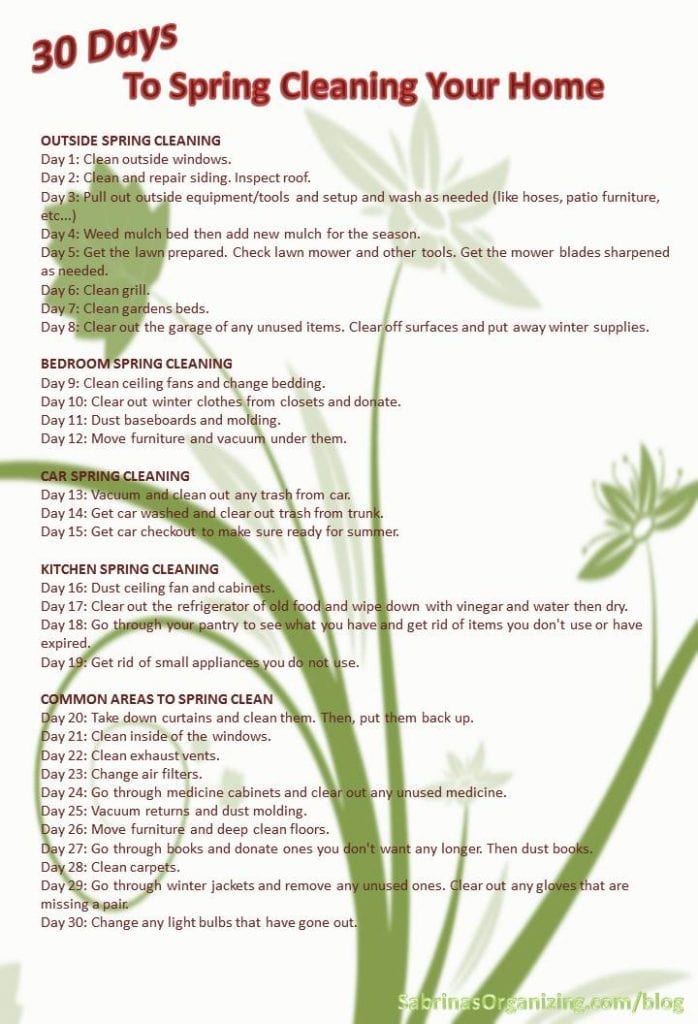
Final Tips to Keep You Moving Forward
Here are a few reminders to keep in mind as you work through your spring cleaning:
- Remember to break tasks down into manageable time blocks. This will eliminate any anxiety about doing the work.
- No project task should be too large (affiliate) - keep tasks 2-3 hours or less so they fit easily into a weekend.
- When you start with a plan, you build momentum because you don't have to decide what to do next.
- Spring cleaning is excellent, and your house smells clean - but the purging and organizing that go along with it make it even more compelling.
- If you still feel overwhelmed by what needs to be done, refer back to the 30-Day Challenge and give yourself one task per day.
- After you complete your customized checklist, make a note in February to revisit it and add any updated tasks.
Below are additional questions and answers you may be wondering about. Feel free to read through them.
Frequently Asked Questions: Effective Spring Cleaning for Busy Parents and Homeowners
Part 1: FAQ for Spring Cleaning for Busy parents and homeowners
Spring cleaning is all about deep cleaning. We don't always deep clean every week. We may be tired or busy. Spring cleaning involves using a wet cleaning method - whether with soap, water, and white vinegar or with a cleaner - as we go through each area of our home from the top down, then revisit every area to make sure it is taken care of. Spring cleaning is also excellent because your house smells clean - but the purging and organizing process that goes along with it makes it more compelling. Eliminating clutter will also help cut down on cleaning, and taking time to deep clean will reduce dust build-up and improve air quality in your home.
The very first step is to remove the clutter before you spring clean. Clearing out the cluttered closets, under the bathroom sinks, in basements, in the garage, and in attics are great places to start. Eliminating clutter will also help cut down on cleaning. A helpful tip: when you clean out your closet, get rid of anything faded, torn, or no longer in use. When in doubt, put it in a box marked "Clothes to get rid of," then place it in another room or garage. If you do not go in the box for at least two months, you can donate or give away the entire box - done and done!
Part 2: FAQ for Spring Cleaning for Busy parents and homeowners
First, write down the deep cleaning tasks for each room. Add the room name and the tasks beneath the specific room. Make sure to include a list of jobs you do from the ceiling to the floor - things like clean fan blades and dust wood molding would be first, while cleaning the vents and floor would be last.
After you write the tasks, add a "due by" date column to break them down for easier completion. So you do not need to write it up every year, use an app like Google Sheets, Microsoft Excel, Microsoft OneNote, or Evernote so you can refer to it each year.
These applications have a to-do box that makes it easy to check off completed tasks. Plus, you can share them with family members and assign them tasks. It's a win-win! =)
Each room will be cleaned the same way, using the following method:
Clear out and Purge
Dust the shelf or cabinet and return the kept items.
Remove the other items and bag them and bring them to your garage or car/truck for donation or recycling/trash.
Dust the area from the ceiling down the walls to the baseboards. Start from the top and work your way down to the floor. Remember, gravity is your friend. =)
Part 3: FAQ for Spring Cleaning for Busy parents and homeowners
These are the areas that don't need a lot of cleaning or decluttering - once a year is usually enough - but they tend to get overlooked:
Basement storage space
Upper kitchen cabinets
Curtains and windows
Kids' toy and gaming areas
Office drawers
Yes, there are some unique tasks that should be done yearly to help keep your home in tip-top shape:
Get carpets cleaned throughout the home. A professional cleaning will clean the carpet and the air, as they usually use a long hose to remove dirt from the house.
Schedule to have your dryer vent cleaned out. Search "Dryer Vent Service Near Me" to find someone near you. This is a fire safety task that should not be skipped!
Inspect your fire extinguisher. If it looks rusted or damaged, replace it.
Get your appliances checked by a professional. Call and schedule an annual service checkup if you have a service agreement for your appliances.
Clean the exhaust vents and replace the air filters. These are easy to forget.
Go through medicine cabinets and dispose of any unused medication. Proper disposal matters.
Part 4: FAQ for Spring Cleaning for Busy parents and homeowners
Having a checklist is a game changer. When you start with a plan, you build momentum because you don't have to decide what to do next. Here are five key reasons a customized spring cleaning checklist helps:
It will help you remember all the detailed tasks you may not do every season.
It allows you to break down the list into easy-to-manage chunks of activities, which you can then spread out over a month or two.
Taking time to deep clean will reduce dust build-up and improve air quality in your home.
While cleaning, you can diagnose any issues in areas you haven't checked.
You can refer to the customized deep cleaning task list each year to see what needs to be completed.
After you complete your customized checklist, make a note in February to revisit it and add any updated tasks that need to be completed. Think about the things you did to improve your home the past year - do these areas need to be cleaned differently? This will help you keep your checklist relevant from year to year and remind you of upcoming jobs. Also remember: no project task should be too large - keep tasks 2-3 hours or less so they fit easily into a weekend. When you start with a plan, you build momentum because you don't have to decide what to do next.
Part 5: FAQ for Spring Cleaning for Busy parents and homeowners
I like doing windows when I take down the curtains. Doing this on a sunny day helps us see the spots - but no direct heat, please; it will get streaky. Here's the method: after spraying the glass from the top down and saturating it, use a squeegee and start at the top-left corner, moving to the right corner. When you reach the right corner, turn the squeegee and move down the window, making a tight zig-zag pattern while overlapping the rows. Then, at the bottom, use a paper towel and wipe off the excess drips around the window and the bottom. It works well, and you don't need to work your shoulder too hard. Pull out the screens and clean them with a hose, brush, dish soap, and water.
As the name implies, spring is an excellent time because the house has been closed for several months and needs fresh air. But if you don't want to clean only in the spring, you can split the tasks between spring and fall, since these are the two times each year when we prepare for summer or winter. It is a good idea to do some of these tasks every weekend; by the time summer arrives, you will have cleared out and cleaned all the areas of your home.
Related Posts:


I hope this spring cleaning guide for busy parents motivates you to complete your chores. It does take time. But you will appreciate it. Start now, and you will be ahead of the game!
What area of your home do you procrastinate the most when it comes to spring cleaning? What task do you dread the most? I would love to hear from you - leave a comment and let's talk through it!