
I am a stickler for saving space. In our smaller home, space is a valuable commodity. So, to save storage space, I often visit my long-term file storage area. In this area, I store all my taxes and other supporting documents. And if I forget or am too busy to spend time on this, I find this area can get disorganized rather quickly. So, I try to go through my long-term files each year. Recently, I decided to do just that and have documented all the tips and thoughts that went through my mind while doing this purging process. This post talks about organizing long-term files for personal and business use. I hope it helps you get inspired to get rid of your papers and organize the ones you have to keep.
Jump to:
Key Takeaways
- Organizing long-term files involves regular purging to maintain clarity and space.
- Utilize accordion folders, clear bins, and color-coding to keep documents accessible and categorized.
- Shred unnecessary bills and emotional papers to declutter your filing system.
- For small businesses, separate personal and business paperwork while maintaining permanent records.
- Establish a routine (affiliate) for monthly mini-purges to prevent overwhelming annual clean-outs.
Tips to Organize Personal Long-Term Paper Files
1. Utility bills do not need to be kept unless you need them for home office expenses.
You do not need to keep utility bills as long as they are paid, especially if you have online access to these accounts. Wait until you get the next bill before getting rid of them, though, just in case of issues.
2. Get rid of pay stubs as long as you have the W-2s with your taxes.
You do not need all your pay stubs at the end of each year, since the totals are shown on your W-2. So, keep the last pay stub of the year, and when the W-2 comes in, make sure your numbers match.
3. Keep your taxes in an accordion folder with all the other tax-related papers.
An accordion folder (affiliate) keeps all receipts, statements, and forms for that tax year in one easy-to-grab spot. Read more here about HOW LONG TO KEEP TAX RETURN SUPPORTING PAPERWORK. The accordion folders below are from Amazon (affiliate); feel free to buy them.
accordion folder options
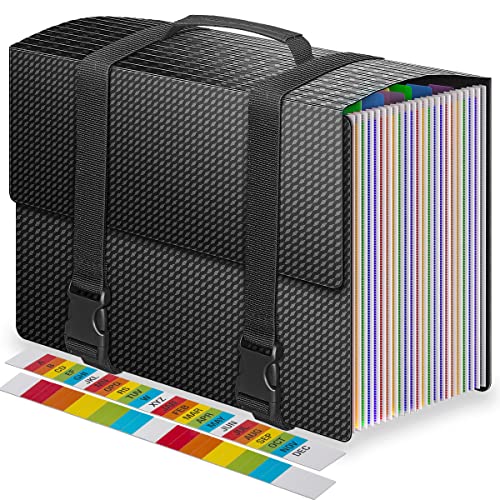
Accordion File Organizer with Handle,25 Pockets Portable
Buy Now →
Accordion File Organizer, 13 Pockets File Folders, Letter Size with Colored Tabs
Buy Now →(affiliate)
4. Reuse your manila folders.
Reuse used manila folders by turning them inside out and using the unused inside tab to write the new content. You can also place fresh manilla folder labels (affiliate) over the previous labels (affiliate). Pick the correct size file labels (affiliate) for your manila folder tabs (affiliate) - they vary from 2 inches to 5 inches. Amazon carries several sizes, so you can get the right one for you.
5. No hanging folders are necessary for long-term files.
Hanging folders are great for inside filing cabinets. They help when you want to subdivide a category. For instance, I have a hanging folder called "Utilities." I have all the household utility companies in manilla folders in the hanging folder for easy access. At the end of the year, I pull the manila folders and place them in long-term storage if I want to keep them. Skipping the hanging folders in your storage bins saves a surprising amount of space.
6. Use one bin that can hold at least two to three (or more) years to save space.
The bin may be full, but it's just paper. Remember, space is valuable in any home, so fill it up. After three years, you can easily revisit these bins and remove unneeded papers.
7. Use a clear bin and label the years on the front.
Clear containers help you see quickly what is in them. Add a large (affiliate), easy-to-read label (affiliate) on the front that lists the years inside, so you don't have to pull bins down to figure out which one you need.
clear file bin option
 Buy Now →
 (affiliate)
8. Shred letters that make you sad or angry.
Keeping memorabilia is nice, but holding on to things that bring back memories of sad or angry times weighs you down every time you open that bin. Letting go of paper tied to negative emotions can be a healing step. (One exception: if a document serves as legal proof of harassment or a violation of a restraining order, box it up and keep it in deep storage where you won't stumble across it.)
9. Shred ALL bills you don't want to keep.
If you like printing e-bills, maybe you want to rethink this process. Instead, store the digital copy in a folder marked "bills." When downloading the file, use the bill name and the month it's for as the filename. Check out my complete instructions on downloading statements and receipts digitally on my post: How to Organize Digital Receipts in Your Home.
shredder option
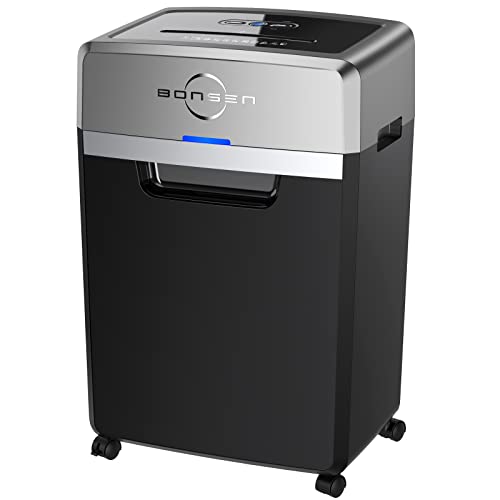 Buy Now →
 (affiliate)
10. Have an easy-faceted receipts accordion folder.
If you keep receipts, have a covered receipts accordion folder (affiliate) so they don't fall out when you store them away. The lid keeps everything inside, even when you slide the folder in and out of a bin.
mini accordion folder option
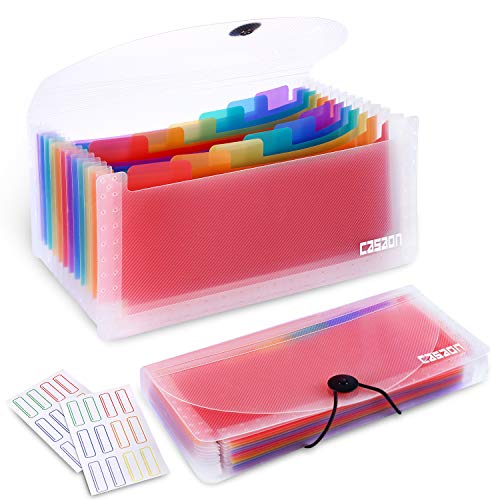
2 Pack 13-Pockets Expanding Accordion File Folder Mini Organizer Wallet
Buy Now →(affiliate)
I've used Quicken products for a very long time and feel that the product's completeness allows us to see our business, property, and investments in one place, so we truly know the net worth of all our assets and liabilities.
Products To Help You Manage Your Money:
Quicken Simplifi - Great for personal tracking
Quicken Business & Personal - perfect for mobile users strictly
Classic Quicken for Windows and Mac - Ideal for laptop users and convenient for viewing on the go.


11. Create a "keep forever" folder for documents that should never be shredded.
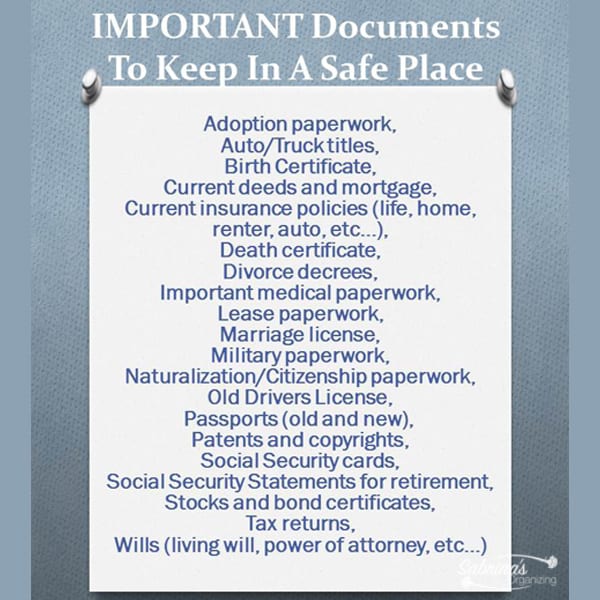
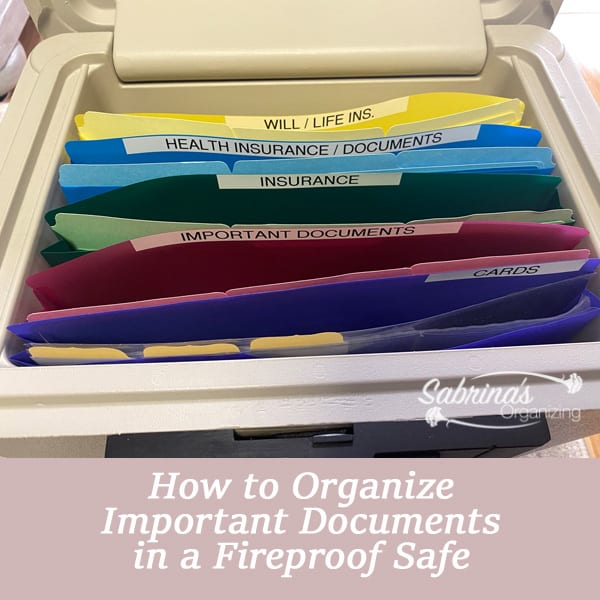
Some papers should never get tossed during a yearly purge - birth certificates, marriage and divorce papers, adoption papers, Social Security cards, military discharge papers, vehicle titles, deeds, wills, and final estate documents. Keep these in a separate, clearly labeled fireproof folder or small safe (affiliate) so they're never mixed in with the bins you cull each year. You'll also know exactly where to grab them in an emergency.
12. Do a 15-minute monthly mini-purge instead of one giant yearly cleanout.
Set a recurring 15-minute appointment on your calendar once a month to go through the current year's incoming papers. This little habit keeps the giant year-end purge from feeling overwhelming, and you'll be amazed how much you can shred in a quarter of an hour. I like to do mine while watching TV - it never feels like wasted time.
13. Keep a running shred pile (not a shred bin).
A bin invites you to "deal with it later," and later never comes. Instead, keep a small open basket near where you sort mail and shred the contents the moment it's full. If you don't own a shredder (affiliate), mark your calendar for the next community shredder (affiliate) event in your area - many towns hold them in spring and fall.
14. Snap a photo of warranties and manuals instead of filing them.
Most product manuals and warranty cards are available as PDFs on the manufacturer's website. Instead of filing the paper, take a quick photo of the model number and warranty info and save it to a "Home - Warranties" folder on your phone. Then recycle the paper. You'll always have what you need without the bulk.
15. Color-code your bins by household member or category.
If you store files for multiple family members - yours, your spouse's, the kids', your parents' estate paperwork - use a small colored sticker or colored label (affiliate) on each bin. A quick glance tells you whose papers are inside without having to read the front. This is especially helpful if you're keeping estate paperwork for loved ones along with your own.
Tips to Organize Small Business Owners' Long-Term Paper Files
This process is a little more complicated for a small business. Read below for additional tips to help keep your small business's long-term papers organized.
16. Keep business invoices and business receipts/expenses as proof for your returns.
Never throw away invoices for your business. You can, however, save them as PDFs stored in a safe (affiliate) place on your computer (affiliate). Don't use image files - if you ever have to print them, your printer (affiliate) will treat them like a photo and use up a lot of ink.
17. Keep your bank and credit card statements for your business.
Banks only store bank statements for a maximum of 3 to 6 months online. So keeping a copy helps if you ever need to reference them later.
18. Keep files for your business in a folder with a faceted top.
Keep your business files in an accordion folder (affiliate) with a lid so they're easily accessible and won't get mixed with personal papers. The lid keeps documents from getting jostled around in the box.
19. Keep your business paperwork separate from your personal paperwork.
Even if your business tax return is filed with your personal taxes, you should always keep the paperwork separated. It makes finding the papers you're looking for easier and quicker than digging through unrelated documents.
20. Keep a "permanent business records" file that never gets purged.
Some business documents should be kept for the life of the business - articles of incorporation or LLC formation papers, EIN confirmation letters, business licenses, partnership agreements, trademark and copyright registrations, insurance policy declarations, and major contracts. Store these separately from your annual tax bins so they're never accidentally shredded during a cleanup.
If you want to keep the receipts digital, check our extensive post: How to Organize Digital Receipts in Your Home.
21. Match your retention schedule to your accountant's advice, not your gut.
The general rule from most accountants is to keep tax-supporting documents for 7 years from the date of filing, while tax returns themselves are kept permanently. But your accountant may have different recommendations depending on your industry, whether you have employees, or whether you've had property transactions. Ask once, write the schedule down, and tape it to the inside of your storage closet door.
22. Back up your digital business files in two places.
If you're moving toward digital recordkeeping (which I highly recommend for receipts and invoices), follow the simple rule of two: one backup on an external hard drive, and one in a secure cloud service. Paper bins can survive a flood that fries a single hard drive - don't let "going digital" mean "going single point of failure."
23. Create a yearly "close-out" checklist for your business files.
At the end of each business year, run through the same short checklist (affiliate): pull last year's active folders into the long-term bin, label (affiliate) the bin, shred anything older than your retention window, back up digital files, and update your master document inventory. Having a written checklist (affiliate) takes the guesswork out and turns close-out into a 30-minute task instead of a weekend project.
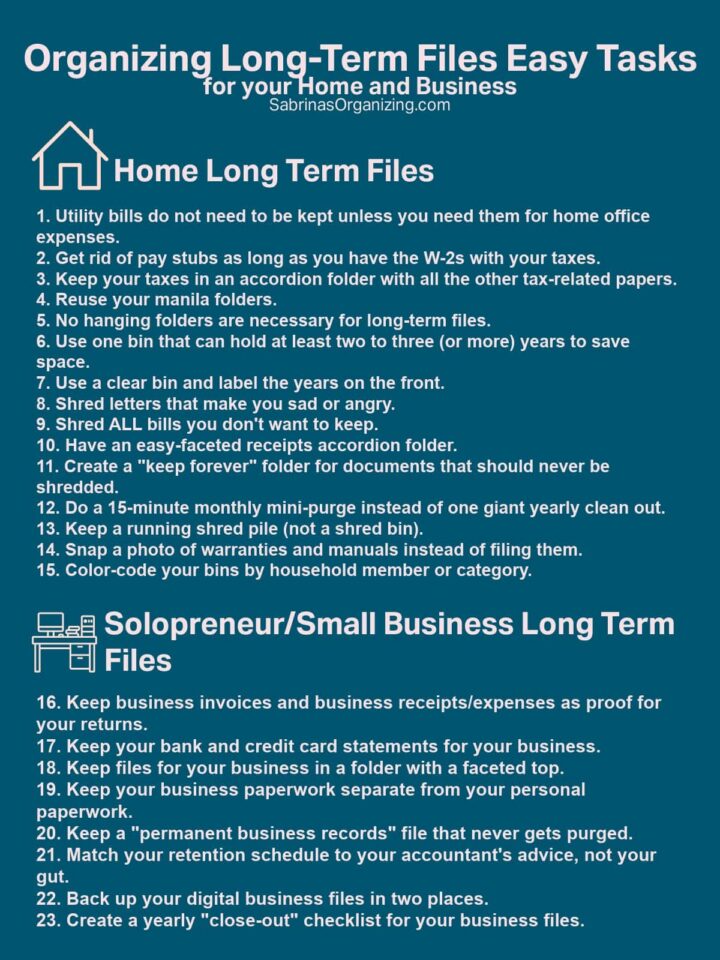
Places to Store Your Organized Long-Term Files
Now that you have all these files organized, let's find a place to store them. There are several places in your home where you can keep these files. It should be a place not used often, but accessible when you need to go into the file bins. Here are some areas that may work for you.
Under the stairs is a good place for these files as long as they are in plastic bins (affiliate) to protect them from animals and water damage.
A closet is another good place to store these file bins. If you have them in sturdy plastic bins (affiliate), you can stack them up.
A storage locker is a great option for small homes, apartments, or tiny homes. If you use a storage locker, it must be climate-controlled to protect the papers from damp conditions. You will also need to pay a monthly fee for this space. Make sure the locker has a secure lock to protect your private information.
A high shelf in a guest room or office closet works well if floor space is tight. Just make sure the bins aren't so heavy that lifting them down becomes a safety issue - split a heavy bin into two lighter ones if needed.
A dry corner of the basement can work, but only if you raise the bins off the floor with a small pallet or shelving (affiliate) unit and run a dehumidifier nearby. Damp basements and paper records do not mix.
Visit our sister blog (SabrinasAdminServices.com) about the business organizing long-term file posts below.
How Long Should I Keep Business Records
7 Areas to Organize Office Files
Benefits and Tips to Revisit Paper Files Yearly
Final Thoughts
I hope this helps you organize your long-term files. I was able to shred three bags of paperwork today. =) How many are you ready to destroy right now? Let's continue the conversation. Do you have any tips for organizing long-term paper files? Please leave a comment below.
Feel free to check out my other home office and paper management posts!
Home Office Posts!
Paper Management Posts!





Janet Schiesl says
Great tips for such an overwhelming topic. It's even harder these days to manage when some things are paper and some are digital and it feels like opportunity for things to be doubled up or lost.
Julie Bestry says
What a robust collection of advice. My favorite piece, though, has to be to get rid of papers that make you angry or sad. So many people hold onto such things out of a misplaced sense that throwing away a mean note or breakup letter absolves the writer of their unkindness. (Do hold onto anything that serves as legal proof of stalking or a violation of a restraining order; but you don't have to keep it where you can stumble across it. Box it up and send it to deepest storage!)
And I'm so glad you raised the issue of bank statements. Any institution that won't give you access to all of your data, in perpetuity, is requiring you to do the heavy lifting, so you may as well go digital. Great post!
Sabrina Quairoli says
Great advice, Julie. Thanks for sharing and commenting.
katherinemacey says
I agree with Julie on this one. Letting go of something that inspires negative emotions can be a great step toward healing from it!
Lisa Gessert says
Excellent paper management tips Sabrina, I love my paper clients and teaching them these great ways of handling their papers.
Sabrina Quairoli says
Thanks for stopping by and commenting, Lisa. =)
Janet Barclay says
You've got a ton of information here; I can't believe that's only 14 tips! I especially like the one about re-using USED file folders. There are many better ways to spend money!
Seana Turner says
I love that tip about turning manila folders inside out. We are in the process of sorting through some old paper (slowly!), and are keeping the used manila folders. I'll pass along this tip because it is really would make the files feel fresh and new if they were inside out.
Linda Samuels says
All great tips. When I began using Quicken to manage our business and personal finances it helped me simplify the paperwork. Since finding receipts or income is easily searchable on Quicjen, I can now file receipts by year in one file instead of subdividing.
My rule for keeping records as per my accountant is to keep the basic backup material for 7 years from date of filing. The tax returns get kept permanently. So each year after taxes are filed, we get to shred the “expired” files.
Sue says
How long are you supposed to keep statements, etc. for a small business?
How long for personal?
Sabrina says
Thanks for leaving a comment. For IRS purposes, you need to be able to show your income, so keep your invoices with your bank statements. Keep these items till the business is non-existent. Businesses are different than individuals. Since statements are a summary of the invoices, you do not need to keep them if you don't want to. Check this out for more details. Hope this helps.
Sabrina says
Sorry it took me so long to get back to you. Check with your accountant. They can help with this. Here is the link to the IRS page. https://www.irs.gov/Businesses/Small-Businesses-&-Self-Employed/How-long-should-I-keep-records. For personal, I suggest to use the same time frame as the small business link above says that way you are covered. Good luck.
Meredith @ The Palette Muse says
These are great tips. I always find that my short term storage becomes my long term storage before I know it. I need to go through the last few years' files and weed out all the stuff I don't need anymore. Thanks for the inspiration!
Pamela Chollet says
Ohh Ohh I hate filing! I always wind up with 50 more sub-categories than I need. My biggest problem is I don't start what I finish because I get overwhelmed by the amount of paper. Right now, I'm debating about hiring a professional organizer to help with the sea of folders I've accumulated. I think I could burn down Rome with what I have in boxes.
Sabrina says
Taking it small works best when you get overwhelmed easily. Also, try to keep your emotions out of it. Remember it is just paper. Before starting create a list of general categories you want to sort into. Then, when you go through the paper, if you see another category come about you can split out the exist smaller pile easily. I think it is a good idea to get help from a P.O. They can create an easier filing system to streamline your process which will help you maintain the system. Good luck!
Mina Joshi says
I hate filing and end up having bills, receipts, letters etc. all over the place. Every so often - I have a tidy up and shred a lot of stuff but I really need to take a day off just to file stuff neatly.
Sabrina says
Mina,
I like to shred while watching TV. It works great and I feel like I am not wasting time watching TV. =)
Marquita Herald says
Excellent tips and I also am BIG on saving space, and saving as many trees as possible. I live on a small Island and am all too aware of our landfill and refuse issues so almost all of my documents are digital and I recycle everything I possibly can.
Sabrina says
Great job Marquita! I have friends that live on an island and when we went to visit years ago, I learned a lot of ways to generate less waste, like cutting up a small tablecloth into small squares, sewing the ends so they don't fray and using the as cloth napkins for everyday. It worked well.
William Rusho says
Great tips this week. This is something I truly need to implement in my life. My paperwork is all over the place, from drawers in my office, to my glove compartment in my car. Thank you for sharing this.
Sabrina says
Thanks for stopping by William!
Beth Niebuhr says
One big space saver that I can do right away is to get rid of those utility bills! Yay! I never even thought of that. I like the idea of using acordian files; great idea.
andleeb says
I follow few of the tips that you have listed to organize files etc. I will try to follow more as I have recently moved to a small house and still I am struggling with organizing my files etc. I hope these tips will help me.
Lenie says
i pretty well do as you listed other than the time of year. I keep a large manilla envelope for our taxes and as I clean up the files at the end of the year, I put all my tax information in the envelope - then I just need to add the Jan/Feb. stuff. Anything outdated and no longer needed gets shredded. Good suggestions.
Erica says
Gosh, just reading about organizing for business makes me tense. I hate organizing. Having said that, you have some really good advice. I love your tip to shred letters that make you sad or angry. Such common sense, but so many of us hold on to things that hurt us. Ok, now that I'm thinking about this I think I'll go organize my receipt file for my business this year tomorrow!
Sabrina says
Good for you Erica! That's wonderful. Paper management makes everyone so crazy. Think of it like a puzzle (it's challenging but not impossible), you just need to find the pieces that fit and then you are good to move on to something else. =)
Donna Janke says
I already do most of this for organizing files, but I haven't always. I had a lot of my old papers and old papers from my parents (who've been dead more than 10 years). Over the past 2 years as we prepared to downsize, we sorted through and got rid of anything but the essentials. We took several boxes to a shredding company. We now make regular use of our own shredder. It's surprising how much paper there still is in what was to become a paperless society!
Sabrina says
That's wonderful, Donna! I have both of my parent's estates papers and have been reducing a little at a time to 1 box each (I am keeping just the estate paperwork). I tend to be conservative so I wait 7 years to reduce their paperwork. Having downsizing as a goal makes it so much easier to get rid of stuff, especially paper. Great job.
Catarina says
Since I already do what you suggest, Sabrina, I naturally believe your suggestions for organizing long term files are great.
Sabrina says
Thanks for stopping by Catarina! Organizing long term files and not keeping too much is so important.